What Affiliate Link Cloaking Does to Tracking
Cloaking means two different things depending on who is reading your page. To Google it is showing search engines content that users never see. To an affiliate program it is hiding where your traffic came from, and Shopify and HubSpot both ban it in writing. In between sits the practical problem: every redirect you add can strip the parameter the network needs to pay you. Here is what the documentation says, as of October 2026.
This article is a documentation review: it is based on the vendors' own published pages, checked on the date shown. We may earn a commission from some links; it never affects what we recommend.
Cloaking means two different things depending on who is reading your page. To Google it is showing search engines content that users never see.
To an affiliate program it is hiding where your traffic came from, and two of the largest SaaS programs ban that in writing.
In between sits the practical problem nobody warns you about: every redirect you add in front of the network link is one more place the click ID can fall out.
All quotations below were read from the vendors own terms and help docs on October 23, 2026.
Two rulebooks apply, and they are not the same rulebook
Most advice on link cloaking answers the SEO question and stops. That leaves the expensive half untouched, because the program agreement is what decides whether the commission is payable.
Shopify is explicit. Its affiliate terms list what an affiliate will not do, and the last item reads: "mask its referral sites or use deceptive redirecting links".
The item before it is just as consequential: "use direct linking to any page on any Shopify website, without prior written permission from Shopify". Your redirect target is covered by the terms as well as your redirect method.
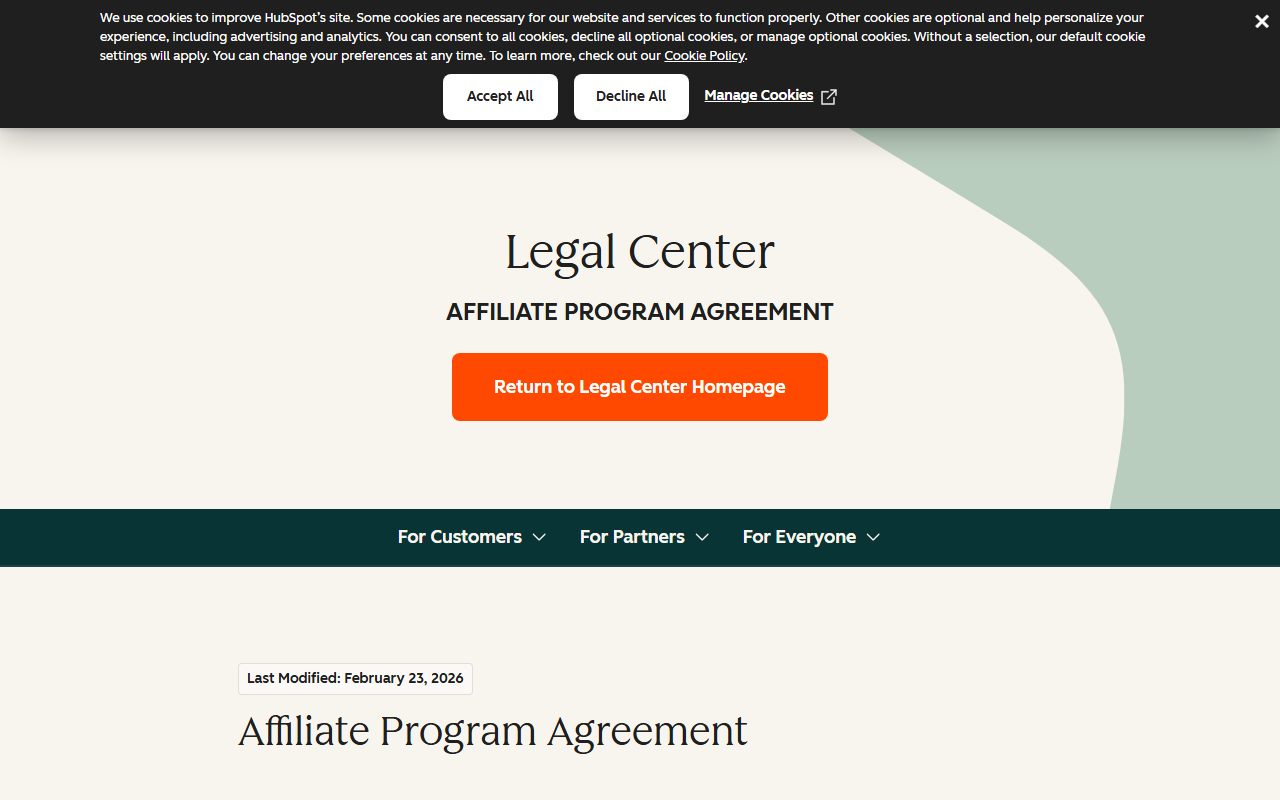
HubSpot uses different words for the same prohibition. Its agreement has affiliates warrant that "you will not attempt to mask the referring URL information", in the same list that bans cookie stuffing and false or misleading links.
Google objects to deception, not to redirects
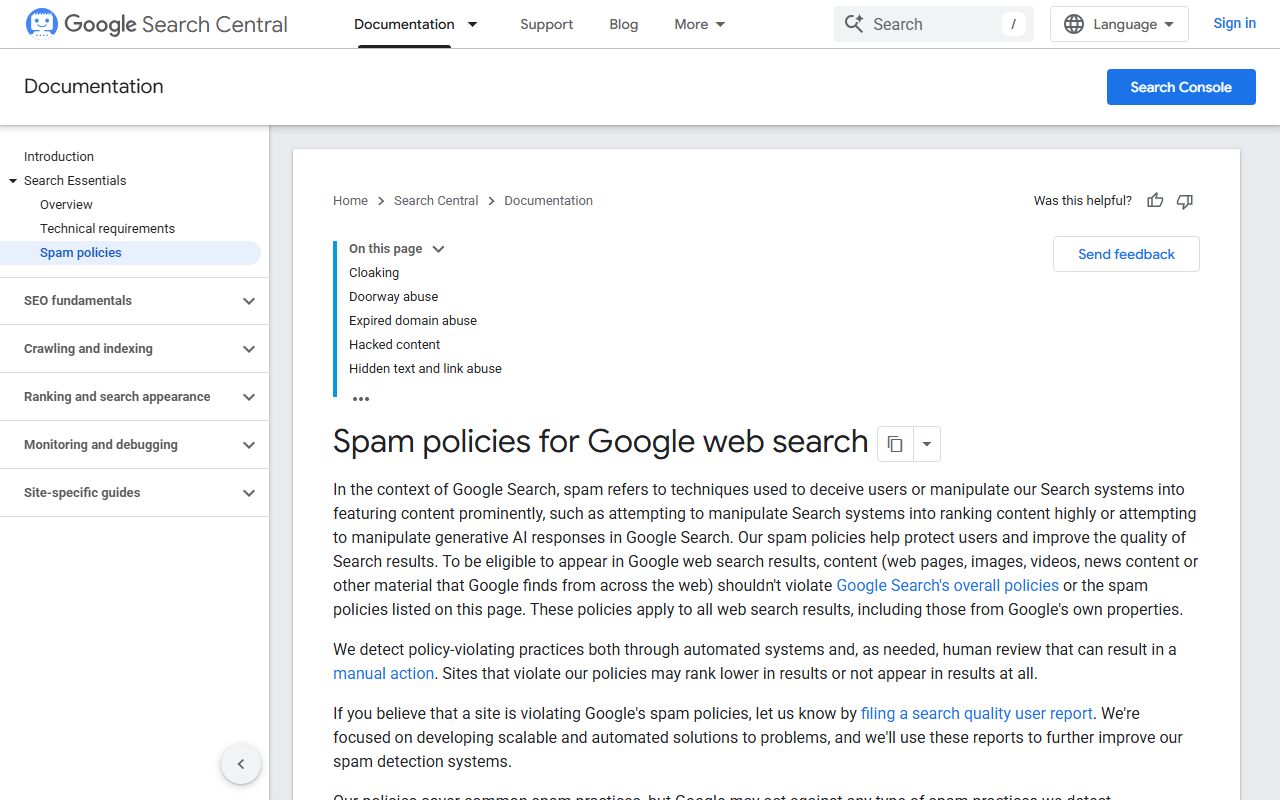
Google defines cloaking as "the practice of presenting different content to users and search engines with the intent to manipulate search rankings and mislead users". A link that sends everyone to the same place is not that.
Sneaky redirecting is defined by intent too. Google calls it "the practice of doing this maliciously in order to either show users and search engines different content or show users unexpected content".
The same page then lists legitimate redirects: moving a site to a new address, consolidating several pages into one, and sending users to an internal page once they are logged in.
Google states the test in one line. Consider "whether or not the redirect is intended to deceive either the users or search engines". An affiliate hop that everyone takes does not meet it.
Google's own page on qualifying outbound links does not use the word affiliate at all. It says to mark "links that are advertisements or paid placements (commonly called paid links)" with the sponsored value, and notes nofollow "is still an acceptable way to flag them".
The wider treatment is in how Google treats affiliate links on your site.
Your redirect sits in front of a redirect the network already runs
An affiliate link is already a redirect. Impact describes recording the referrer "during the gateway redirect from a partner's promotional site to a program landing page", which means the tracking domain is a hop of its own.
Brands have to whitelist where that hop may land.
Impact calls these permitted domains, and warns that if partners do not use them, "all traffic they drive using that link will be sent to a generic impact.com page with no options to head to your website".
Readers see the failure as an error message, not as a tracking problem. Impact lists the user-facing string "The link you clicked on is malformed. Contact the editor of the originating page" against permitted deep link domains and against blocking or redirect rules.
A second message is reserved for a different cause: "The link you clicked on has expired. We apologize for any inconvenience", which Impact attributes to the partner being on a program denylist.
One parameter has to survive every hop
Impact names the parameter directly. In its troubleshooting table, the fix is to "Ensure that the clickId parameter is configured", because without it "it would negatively affect tracking the user journey and attribution".
For Safari, Impact asks brands to confirm the program tracking template contains a query string parameter "exactly identical (case-sensitive)" to irclickid equals clickid. Case sensitivity is not a detail a URL shortener respects.
Impact also flags the general case: "you may have an external redirect unrelated to impact.com which may be causing problems (such as missing parameters or unexpected landing pages)". A cloaking plugin is exactly such an external redirect.
If the ID survives, you can still segment your own pages. That is the job of the sub-ID, covered in how sub-IDs show which page earned a commission.
The referrer is the first thing a redirect chain loses
Impact publishes a long list of reasons a click arrives with no referring domain. It includes switching from https to http, switching from one secure URL to a completely different secure URL, and proxies or security software that strip the referrer from all requests.
Browser policy does the rest. The same page notes that "Some browsers privacy policies limit access to prevent HTTP_REFERER from being passed", and that add-ons can block it for privacy reasons.
Impact's own conclusion is blunt: it "recommends that you do not use the Referring URL option in payout groups when determining payouts to partners". A missing referrer is normal, not evidence of cloaking.
That cuts both ways. Awin tells advertisers to "Check that the URL matches the partner's approved placement" when hunting fraudulent sales, so a chain that erases your referrer also erases your defence.
Cookies fail before cloaking does
Safari blocks third-party cookies through Intelligent Tracking Protection, and Impact tells brands that legacy pixel, iframe or image tracking "will affect your tracking" unless they migrate. Custom tracking domains on the brand's own domain avoid the problem.
Consent does the same job as a browser setting. Awin states that its tracking cookies "cannot be opted in by default as they are not considered to be strictly necessary", with a narrow exemption for cashback, loyalty and some voucher activity.
Semrush says the quiet part out loud in its affiliate FAQ, listing a referral not accepting the necessary cookies as a reason the sale never appears in your statistics.
None of that is fixed by a tidier link. Window length is a separate variable again, compared in how affiliate cookie windows compare across SaaS networks.
- Use the network link, or the program's own short domain, not a third-party cloaker
- If you redirect, pass every query parameter through unchanged, including the click ID
- Keep the hop on https the whole way so the referrer is not stripped
- Check the landing domain is on the program's permitted list before publishing
- Mark the link sponsored or nofollow, and disclose it in visible text
- Click your own published link once a quarter and watch where it lands
Bottom line
Cloaking buys tidy URLs and risks the commission twice: once in the agreement, once in the parameter that gets dropped. A plain network link with a clear anchor costs nothing and fails in fewer places.
If you want readable links, ask the program whether it offers a branded tracking domain. That is a documented feature, not a workaround, and it keeps you clear of the masking clauses in the program terms you should read before promoting.
Then check the rest of the promotion rules in the same pass, because paid search and coupon clauses sit in the same section as masking, as self-referral, coupon and PPC rules shows. Disclosure remains separate and mandatory under the FTC guides.
Frequently asked questions
Is affiliate link cloaking against the rules?
In some programs, yes. Shopify terms ban masking referral sites or using deceptive redirecting links, and HubSpot has affiliates warrant they will not attempt to mask the referring URL information. Both were read on October 23, 2026.
Does Google penalise cloaked affiliate links?
Google penalises deception, not redirects. Its spam policies define cloaking as presenting different content to users and search engines with intent to manipulate rankings, and list several legitimate reasons to redirect one URL to another.
Can a redirect break affiliate tracking?
Yes. Impact tells brands to check that the clickId parameter is configured and warns about external redirects causing missing parameters or unexpected landing pages. A lost click ID means a lost attribution.
Why do some clicks show no referring domain?
Because the referrer is fragile. Impact lists protocol switches, proxies, security software, browser privacy policies and add-ons among the causes, and advises brands not to use the referring URL when determining payouts.
Is a shortened link the same as a cloaked link?
Not necessarily, but it carries the same risk. Shorteners can drop query strings, and Impact requires a parameter identical and case-sensitive to irclickid equals clickid for Safari tracking to work.
What should I use instead of a cloaker?
The network link, or a branded tracking domain the program offers. Impact notes that custom tracking domains on the brand's own domain are generally already compliant with Safari's Intelligent Tracking Protection.
Sources
- Shopify Affiliate Marketing Program Terms, April 2026 (section 7.1: no masking referral sites or deceptive redirecting links, no direct linking without written permission) (checked Oct 23, 2026)
- HubSpot Affiliate Program Agreement (affiliate warranties: no cookie stuffing or pop-ups, no masking the referring URL information) (checked Oct 23, 2026)
- Google Search Central: Spam policies for Google web search (cloaking and sneaky redirects definitions, legitimate redirect examples, thin affiliation) (checked Oct 23, 2026)
- Google Search Central: Qualify your outbound links to Google (sponsored for advertisements and paid placements, nofollow still acceptable) (checked Oct 23, 2026)
- impact.com Help Center: Troubleshoot Broken Tracking Links (malformed and expired link messages, clickId parameter, external redirects) (checked Oct 23, 2026)
- impact.com Help Center: Set Up Permitted Domains for Deep Linking (non-permitted domains send traffic to a generic impact.com page) (checked Oct 23, 2026)
- impact.com Help Center: Using the Referring URL Parameter (reasons the referrer is missing, recommendation not to use it for payouts) (checked Oct 23, 2026)
- impact.com Help Center: Determine your Program's ITP Compliance (Safari third-party cookie blocking, irclickid parameter, custom tracking domains) (checked Oct 23, 2026)
- Awin help: Cookie consent settings (Awin tracking cookies are not strictly necessary by default; cashback and loyalty exemptions) (checked Oct 23, 2026)
- Awin help: How to identify fraudulent sales (check the referring URL against the partner's approved placement) (checked Oct 23, 2026)
- Semrush Affiliate Program FAQ (referral not attributed if the user did not accept the necessary cookies) (checked Oct 23, 2026)