How Google Treats Affiliate Links on Your Site
Google does not penalise affiliate links. It asks that paid links carry rel=sponsored, and it judges the page on what it adds beyond the merchant's own description. Four of its documentation pages say so, including one from 2014 that has never been withdrawn.
This article is a documentation review: it is based on the vendors' own published pages, checked on the date shown. We may earn a commission from some links; it never affects what we recommend.
Monetising a SaaS review site with affiliate links is allowed, and Google says so in its own documentation. What it asks for is narrow and specific: mark the paid link, and give the reader something the merchant's own page does not.
Two of its spam policies and one blog post from January 2014 explain what happens when a site does neither. Every quotation below was read from Google Search Central on October 13, 2026.
Tag the link: sponsored is the current value, nofollow is still accepted
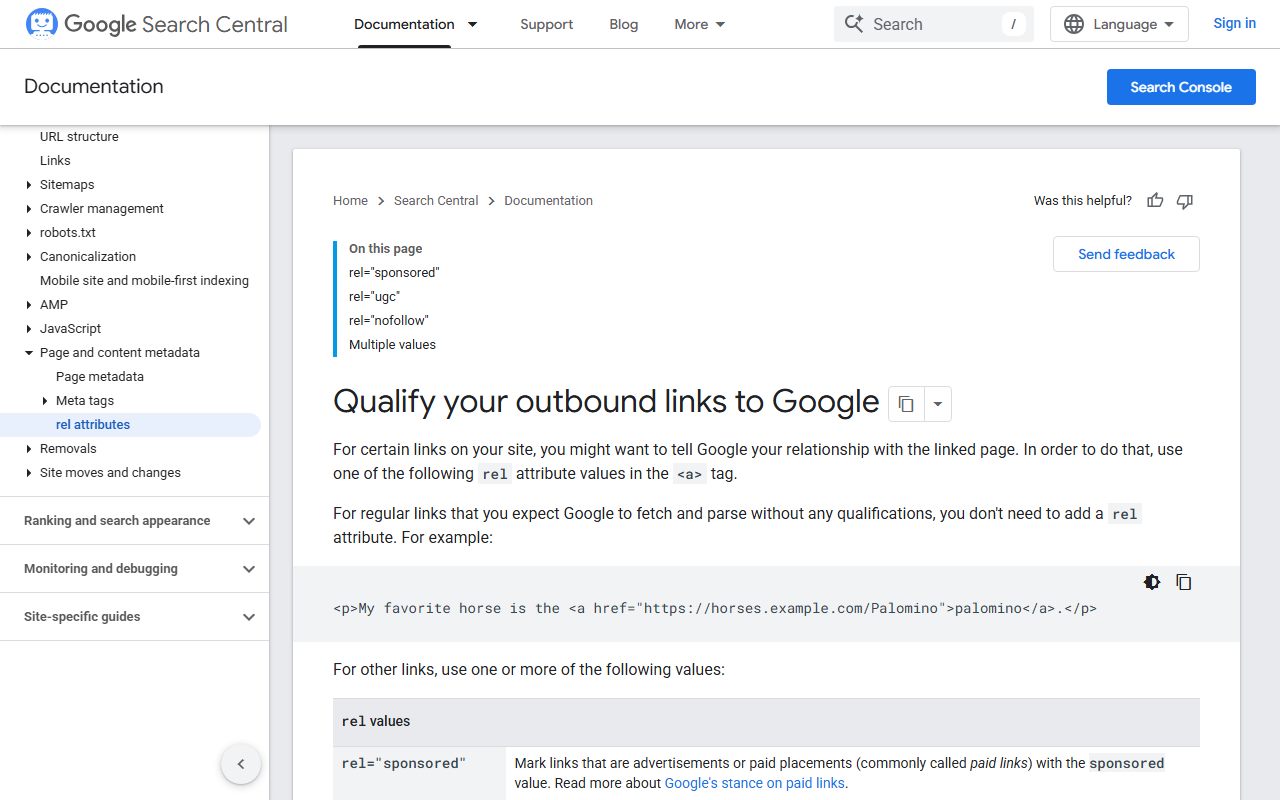
Google's page on qualifying outbound links says to mark links that are advertisements or paid placements, commonly called paid links, with the sponsored value. It notes that nofollow was previously recommended for these links and remains acceptable.
The attribute values can be combined. The page describes a space-separated or comma-separated list, so a sponsored link inside a reader comment can carry both sponsored and ugc.
The effect is stated plainly: links marked with these rel attributes will generally not be followed. That is the point of the tag, not a penalty.
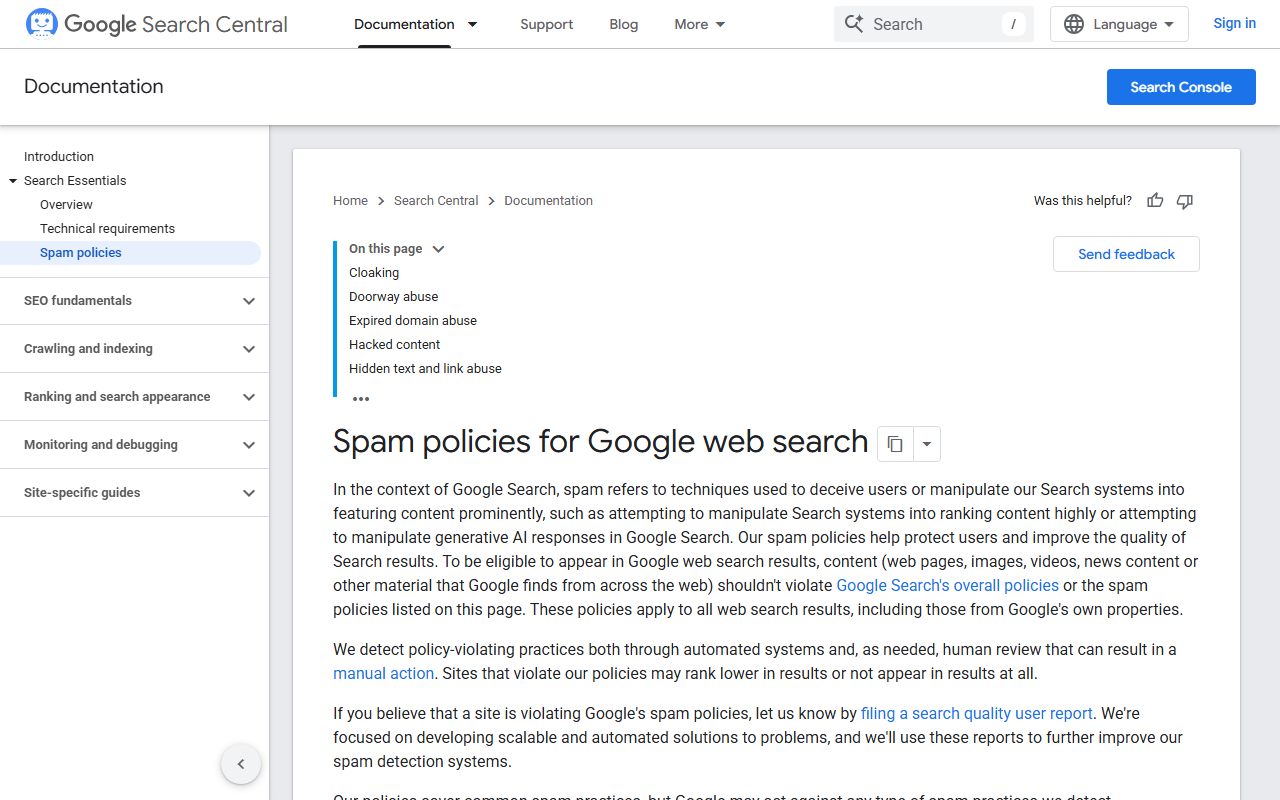
Google's spam policies make the same offer in the other direction. They say buying and selling links is a normal part of the economy of the web for advertising and sponsorship purposes, and permit such links when they are qualified with nofollow or sponsored.
Thin affiliation is defined by what you add, not by the links
The spam policies define thin affiliation as publishing content with product affiliate links where the product descriptions and reviews are copied directly from the original merchant, without original content or added value.
The same passage lists what a good affiliate page does instead: additional information about price, original product reviews, rigorous testing and ratings, navigation of products or categories, and product comparisons.
Three of those five are available to a publisher who never touches the product. Price research, category navigation and side-by-side comparison are documentation work, and they are the backbone of a program comparison.
A worked example of that kind of value is a table of what a given rate actually pays over a year, as in what recurring commission really pays over 12 months.
Google asked one question in 2014 and never dropped it
A Search Central blog post from January 27, 2014 remains the clearest statement of the test. It describes sites that display content provided by an affiliate program, the same content available across hundreds or even thousands of other sites.
The question it poses is the one to hold a draft against: does this site provide significant added benefits that would make a user want to visit this site in search results instead of the original source of the content?
The consequence is stated in the same post. If the answer is no, the site may frustrate searchers and violate the quality guidelines, and Google says it may take action including removal from its index.
For a program comparison the honest answer usually comes from assembling figures no single vendor publishes together, such as the window comparison in how affiliate cookie windows compare across SaaS networks.
Scaled content abuse is about volume without value
The spam policies name a second risk that affiliate sites run into: generating many pages with generative AI tools or similar tools without adding value for users, or scraping feeds and search results to generate many pages that provide little value.
Note what is not prohibited. The policy is about pages produced at volume with nothing in them, not about the tool used to write a page that carries original research.
Google's guidance on helpful content adds a disclosure duty rather than a ban. It asks whether it is self-evident to visitors who authored the content, and it asks sites to disclose how content was produced, including any use of automation or AI generation.
The same guidance asks whether there is an existing or intended audience that would find the content useful if they came directly to the site, which is a reasonable test for any new page in a series.
In practice that means each page in a program series needs its own figures rather than a reshuffle of the last one, in the way read SaaS affiliate program terms before promoting works from the agreements themselves.
The review guidance asks for evidence, so state your method
Google's advice on writing reviews asks authors to demonstrate knowledge of what they are reviewing and to provide evidence such as visuals, audio or other links of their own experience with the product.
It also asks for quantitative measurements of how something performs in various categories, an explanation of what sets a product apart from competitors, and coverage of comparable alternatives for particular uses.
Where a publisher grades from documentation rather than use, the honest route is to say so on the page and to make the quantitative part real: published prices, published windows, published thresholds, each with the date they were read.
The guidance also suggests including links to multiple sellers so the reader can purchase from the merchant of their choice, which for software usually means naming more than one program or reseller.
That approach also keeps the commercial incentive separate from the ranking, a habit the terms themselves reward, as discussed in read SaaS affiliate program terms before promoting.
A checklist for an affiliate page
Six items, each tied to a specific line in the documentation above rather than to folklore about affiliate SEO.
- Every commercial outbound link carries rel="sponsored", or nofollow where sponsored is not available
- Nothing on the page is a copy of the merchant's own description
- At least one element the merchant does not publish: a price comparison, a calculation, a table across vendors
- An author and a method the reader can see, including any use of automation
- More than one option named, so the reader has a choice of seller
- A date on every figure, so the page can be re-checked rather than re-written
Disclosure to readers is a separate legal obligation from link tagging, and satisfying Google's rel attribute does not satisfy a consumer-protection regulator. The two jobs need two pieces of markup and copy on the page.
Bottom line
Affiliate monetisation is permitted; thin affiliation is not. Tag the paid links, then make sure the page would still be worth reading if the links were removed.
The test Google published in 2014 is still the one to apply: would a reader rather land here than on the vendor's own page? If the answer is only yes because of the links, the page is the problem.
For program-level detail that merchants do not put side by side, the comparisons in affiliate vs referral vs partner programs in SaaS and how affiliate cookie windows compare across SaaS networks show the shape of that added value.
Frequently asked questions
Does Google penalise sites with affiliate links?
No. Its spam policies describe paid links as a normal part of the web economy when qualified with nofollow or sponsored. What the policies target is thin affiliation, where merchant descriptions are copied with no added value.
Is rel="sponsored" required on every affiliate link?
Google's documentation asks that advertisements and paid placements be marked with sponsored, whether the links were created manually or dynamically. Its page says nofollow remains acceptable for the same purpose, as read October 13, 2026.
Can I combine rel values?
Yes. The qualifying links page describes the values as a space-separated or comma-separated list, so an affiliate link inside user-generated content can carry both sponsored and ugc.
Is AI-assisted writing against the rules?
Not by itself. The spam policy targets generating many pages without adding value for users. Google's helpful content guidance asks publishers to disclose how content was produced, including any use of automation.
What counts as added value on an affiliate page?
Google's own list includes additional information about price, original reviews, testing and ratings, category navigation and product comparisons. Three of those need no access to the product, only published figures and a date.
Should a review page link to more than one seller?
Google's review guidance suggests considering links to multiple sellers so readers can buy from the merchant of their choice. For software that usually means naming competing programs or resellers alongside the first pick.
Sources
- Google Search Central: Qualify outbound links (sponsored, nofollow, ugc; combined values; links generally not followed) (checked Oct 13, 2026)
- Google Search Central: Spam policies for Google web search (thin affiliation, link spam, scaled content abuse, cloaking) (checked Oct 13, 2026)
- Google Search Central blog, January 27, 2014: Affiliate programs and added value (significant added benefits test) (checked Oct 13, 2026)
- Google Search Central: Creating helpful, reliable, people-first content (who, how, why; disclosing automation) (checked Oct 13, 2026)
- Google Search Central: Write high quality reviews (evidence of experience, quantitative measurements, links to multiple sellers) (checked Oct 13, 2026)