How Affiliate Cookie Windows Compare Across SaaS Networks
A 90-day cookie on PartnerStack, a per-contract referral window on Impact, a 30-day industry default on Awin, and a per-advertiser period on CJ. Here is what the four networks' own documentation says about tracking windows, as of October 2026.
This article is a documentation review: it is based on the vendors' own published pages, checked on the date shown. We may earn a commission from some links; it never affects what we recommend.
The cookie window on a SaaS affiliate program is not set by the program alone. The network underneath it decides how the cookie is stored, when the clock restarts, and whether the contract or the cookie governs. Those rules differ between Impact, PartnerStack, Awin (which now runs ShareASale) and CJ. This note reads each network's own help documentation and public pages, checked October 10, 2026, and lays the rules side by side. Where a network does not publish a figure, the note says so. For the program-level clauses that sit on top of these network rules, see our guide to reading SaaS affiliate terms before you promote.
Separate the cookie lifespan from the referral window
The first thing to learn is that a cookie living in a browser for a year does not mean you get paid for a year. Networks distinguish the technical cookie lifespan from the contractual referral window, and the shorter of the two is what pays.
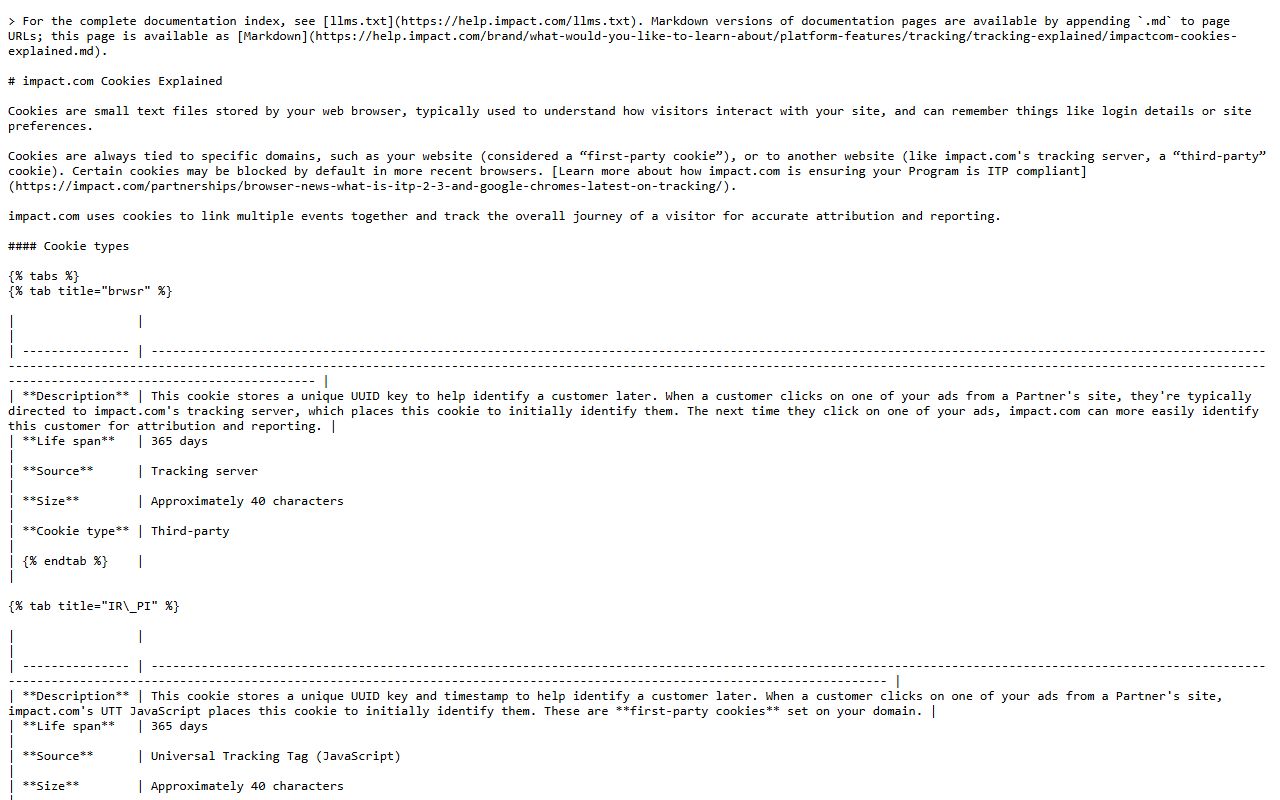
Impact makes this explicit. Its cookie documentation lists the main tracking cookies, brwsr and IR_PI, at 365 days, and the last-click cookie IRLD at 180 days. Its referral-window article then states that the referral window is set per partner contract, with no network default.
In practice that means two Impact programs with identical cookies can pay on completely different windows. HubSpot's program page cites 180 days; Semrush's cites 120 days with last-click attribution. Both run on Impact, as of October 2026.
When you read a program's terms, look for the window in days inside the contract or program page, not in the cookie policy. The cookie policy tells you how tracking works; the contract tells you when it stops paying.
Impact: the contract live on the action date decides
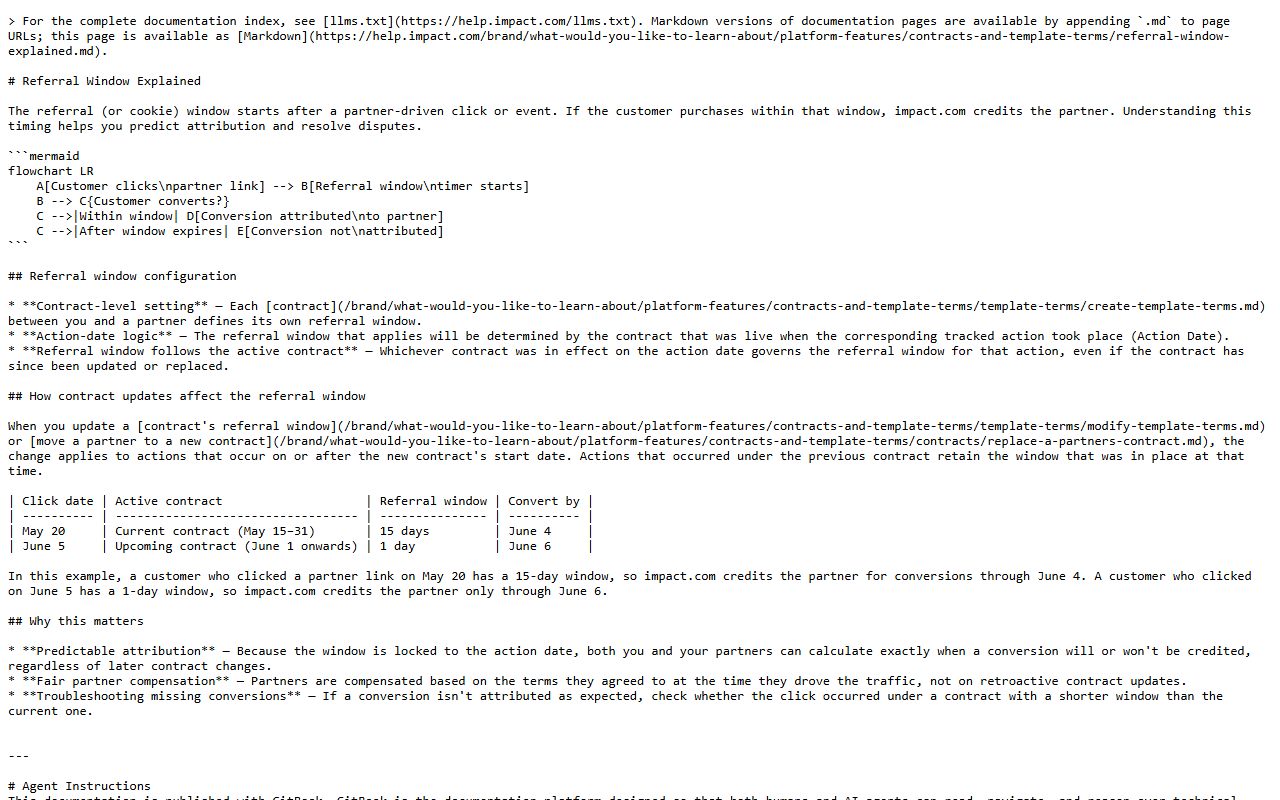
Impact's referral-window article adds a detail most affiliates miss. The window that applies to a sale is the one in the contract that was live on the action date. If a brand shortens the window later, actions already recorded keep the old window.
The article's own example: a click on May 20 under a 15-day window can convert through June 4. A click on June 5 under a 1-day window can convert only through June 6. The brand chooses the number; Impact enforces it.
Impact also layers two timing rules after the sale. The action locking period, up to 90 days as a fixed number, is when a brand can still reverse or modify an action. The payment scheduling period runs after locking and is also set by the brand.
Impact's worked example has January actions locking on March 19 and partners paid on April 20. So a sale credited in January under a long cookie window can still take three months to reach you. Budget for that gap.
PartnerStack: 90 days, and the clock restarts on every click
PartnerStack publishes the clearest number of the four. Its help article on cookie windows states that cookies last for 90 days from the initial click, and that if the potential customer engages with the referral link again, the 90 days restart.
The cookie is first-party, set on the vendor's domain, and keeps tracking if the visitor leaves and returns without clicking again. The article's condition is strict: the referral must sign up or buy on the same browser and device used to click, or the referral is missed.
Programs can still state their own window on top. Notion, on PartnerStack, says a referred workspace must upgrade within 180 days of clicking, credited to the last link clicked. When program page and network article disagree, ask the program manager in writing which governs.
Notion also shows how a long window can be clawed back: rewards are deducted if the user downgrades or refunds within the first 2 months of the subscription, as of October 2026. A long cookie window and a short clawback window are a common pair.
Awin and ShareASale: a 30-day industry default, set per program
ShareASale is now an Awin brand. Awin's getting-started page for ShareASale states that new customers no longer sign up to ShareASale and are invited to launch directly with Awin, with the goal of one platform. ShareASale's old help URLs redirect to help.awin.com.
Awin's cookie article defines cookie duration as how long a cookie remains valid after a user clicks a partner link, and says the industry standard is 30 days, but durations may vary by program. Publishers are told to check the program's setting under Account, Profile, Overview.
Attribution on Awin is last contact wins with a hierarchy: a post-click cookie beats a soft click, which beats a post-view cookie. Commission by Assist can reward a publisher who helped without being the last click, but the standard program pays the final click.
Payment timing is published: Awin releases payments twice a month, on the 1st and 15th. A minimum payout threshold is not stated on the public pages we read.
CJ: the period lives inside each advertiser's program terms
CJ's public site, checked October 10, 2026, states that CJ pays out twice monthly in over 150 currencies via direct deposit or Payoneer. It does not publish a network-wide cookie or action referral period on those pages.
CJ's support article on cookieless tracking and its publisher service agreement could not be retrieved from our location that day, so this note does not quote them. Structurally, on CJ the action referral period is an advertiser-level setting shown in each program's terms inside the publisher account.
If you are evaluating a CJ program, open its program terms in the account and record the action referral period, the locking period and the payment terms before you build content. Do not rely on third-party summaries, including this one, for CJ figures.
Build a one-page sheet before you promote
Each network needs the same six facts captured per program. Write them down with the date you read them, because every network above lets the brand change them.
- Window in days, and whether it restarts on a second click (PartnerStack: yes; Impact and Awin: per contract or program)
- Attribution model: last click on Impact's IRLD cookie, last link clicked on Notion, last contact wins on Awin
- Cross-device rule: PartnerStack requires the same browser and device; assume the same elsewhere unless stated
- Locking or validation period before an action becomes final (Impact: up to 90 days fixed, or a month-plus-days rule)
- Payment calendar: Impact per brand, Awin on the 1st and 15th, CJ twice monthly
- Clawback window after the sale (Notion: 2 months; HubSpot: offsets against your balance)
The payout side of this sheet matters as much as the window. For how a recurring rate turns into real dollars over a year, see what recurring commission really pays over 12 months.
Bottom line
PartnerStack publishes a 90-day restarting cookie. Impact publishes no default and leaves the window to each contract, with cookies that outlive it. Awin cites a 30-day industry standard and lets programs vary it. CJ keeps the period inside each advertiser's terms.
Read the program page for the number, the network article for the mechanics, and the contract for which one wins. Then record the date. A cookie window is a setting, not a promise.
Frequently asked questions
Which affiliate network has the longest cookie window?
None of the four sets a single network-wide window. PartnerStack documents 90 days that restart on a new click. Impact leaves it to each contract, so HubSpot runs 180 days and Semrush 120 days on the same network. Awin cites 30 days as the industry standard, per program.
Does a 365-day Impact cookie mean I get paid for a year?
No. Impact's brwsr and IR_PI cookies last 365 days, but the article on referral windows says the window is set per partner contract. The contract figure is the one that pays. Treat the cookie lifespan as a technical ceiling, not the payout window.
Is ShareASale still a separate network in 2026?
Not for new sign-ups. Awin's own page says new customers are invited to launch directly with Awin, and ShareASale help links redirect to help.awin.com. Existing ShareASale programs are being moved onto one platform, as of October 2026.
Sources
- impact.com help: Referral Window Explained (checked Oct 10, 2026)
- impact.com help: impact.com Cookies Explained (checked Oct 10, 2026)
- impact.com help: Set Action Locking & Payment Scheduling Periods (checked Oct 10, 2026)
- PartnerStack help: Cookie windows and attribution logic (checked Oct 10, 2026)
- Awin help: Understanding cookies in affiliate marketing (checked Oct 10, 2026)
- Awin help: Awin cookie types and attribution hierarchy (checked Oct 10, 2026)
- Awin: Getting started (ShareASale customers) (checked Oct 10, 2026)
- Awin: What is affiliate marketing (payments on the 1st and 15th) (checked Oct 10, 2026)
- CJ: Publishers overview (two monthly payouts) (checked Oct 10, 2026)
- HubSpot Affiliate Program (180-day cookie, Impact) (checked Oct 10, 2026)
- Semrush Affiliate Program (120-day cookie, last click, Impact) (checked Oct 10, 2026)
- Notion Affiliate Program (180 days, PartnerStack) (checked Oct 10, 2026)