How to Read SaaS Affiliate Terms Before You Promote
The headline commission is not the deal. These seven clauses decide what a SaaS affiliate program actually pays, with figures read from HubSpot, Shopify, Semrush, Notion and Kit in October 2026.
This article is a documentation review: it is based on the vendors' own published pages, checked on the date shown. We may earn a commission from some links; it never affects what we recommend.
A SaaS affiliate program's headline commission tells you almost nothing about what you will actually be paid. The money is decided by seven quieter clauses: the cookie window, the attribution model, the payout threshold and schedule, the refund clawback, the self-referral ban, the paid-search rules, and the approval criteria. This guide walks through each clause and shows what it looks like in real programs. We read the public program pages and legal agreements of HubSpot, Shopify, Semrush, Notion and Kit on October 9, 2026, and every figure below comes from those pages with that date attached. Where a program does not publish a term, the guide says so rather than guessing.
Find the cookie window and the conversion window first
The cookie window is the number of days between a click on your link and a purchase that still earns you credit. It is the single biggest driver of affiliate income for software, because SaaS buyers rarely sign up on the first visit.
The spread between programs is wide. Semrush states a 120-day cookie life. Shopify tracks referrals for 30 days from the click, as of October 2026. HubSpot's program page cites a 180-day cookie window, as of the same date.
Read for a second number: the conversion window. Notion does not state a cookie length but counts an upgrade only if it happens within 180 days of the click. Shopify tracks free-trial referrals for up to 400 days after the store becomes a paid store.
Kit's affiliate page, checked October 9, 2026, does not publish a cookie window at all. When the number is missing from the public page, ask the program manager in writing before you build content around it.
Check which click gets credit
Attribution decides what happens when a buyer clicks two affiliates' links. Under last-click, the final link before purchase wins. Under first-click, the earliest link wins. Most SaaS programs use last-click, which punishes top-of-funnel content and rewards coupon and comparison pages.
Semrush and Notion both state last-click attribution on their program pages, as of October 2026. Shopify and Kit do not state a model on the pages we read.
HubSpot's affiliate program agreement, last modified February 23, 2026, is unusual. It measures the window from the lead's first click, and where two affiliates compete it may pay whichever one HubSpot considers most eligible, at its discretion. That is neither pure first-click nor last-click.
Read the payout threshold and the lock period together
A low payout threshold looks generous, but the lock period decides when money actually moves. The lock is the time a sale sits unpaid so the vendor can confirm the customer stayed and did not refund.
HubSpot and Shopify both require a $10 USD minimum balance before withdrawal, as of October 2026. Both run on Impact and pay by direct deposit or PayPal. Shopify posts commissions once a month, on the 22nd, for the previous month's referrals.
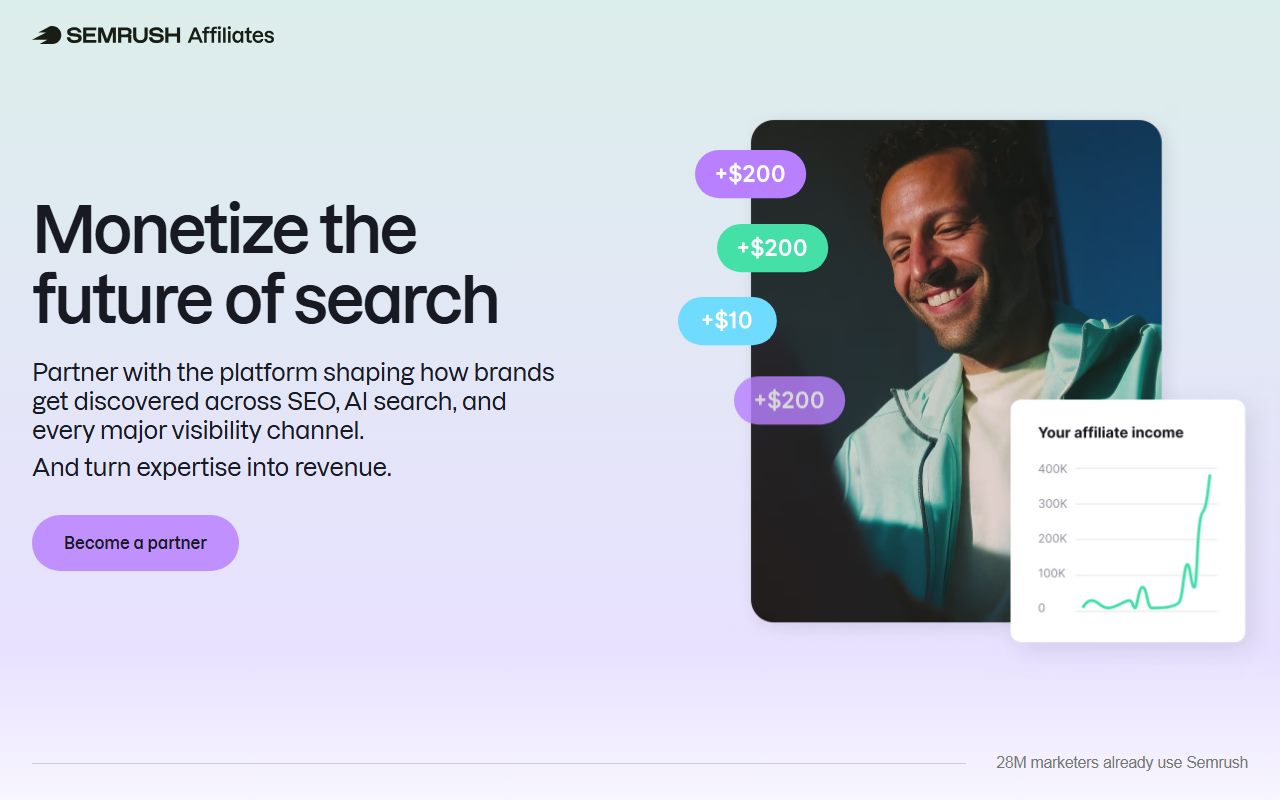
Semrush is explicit about timing. Transactions lock 27 days after the end of the month, then pay 21 days after the month they lock. A sale on October 1 can take roughly three months to reach your bank. Semrush does not publish a minimum threshold.
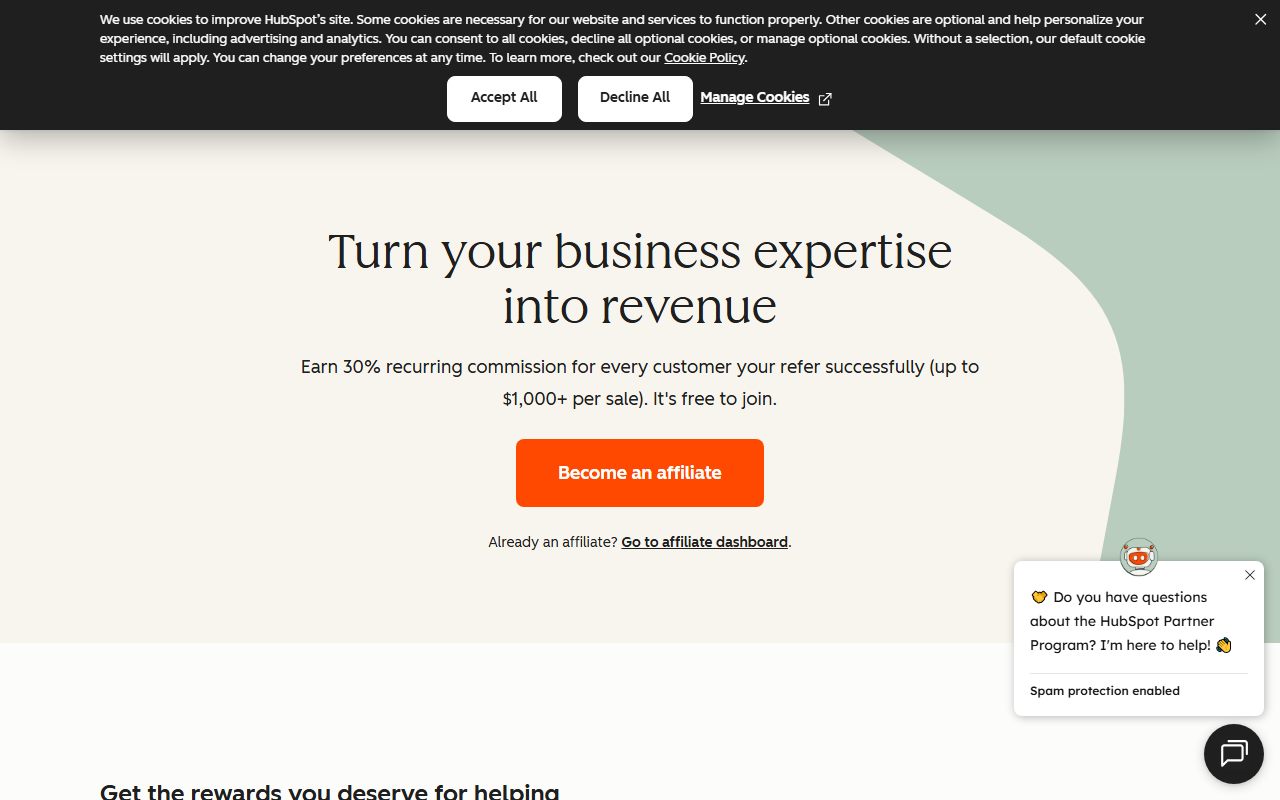
HubSpot's agreement names a lock period but leaves the length to the affiliate dashboard. It adds a forfeiture rule: if your contract, account, payment method or tax documents stay incomplete for six months after a transaction closes, that commission is gone.
Notion and Kit do not state a threshold or schedule on their public pages. Both run on PartnerStack, so the platform's own payout rules apply.
Look for the refund clawback clause
A clawback lets the vendor take back commission when the customer refunds, downgrades or cancels early. Every program has one in practice. The question is whether it is written down and for how long.
Notion states it plainly: if a referred user downgrades from a paid monthly plan to free, or receives a refund within the first two months, Notion may claw back the reward or deduct it from future commissions.
HubSpot's agreement never uses the word refund. Instead, commission depends on the customer remaining a customer through the lock period, and HubSpot may offset amounts owed to it against your balance. The effect is the same as a clawback.
Shopify, Semrush and Kit do not publish a clawback rule on the pages we read on October 9, 2026. Assume one exists inside the network agreement on Impact or PartnerStack.
Treat self-referral and brand bidding as instant bans
Self-referral means buying through your own link, or sharing commission with the buyer. Programs treat it as fraud, and a single flagged order can close the account and void unpaid balances.
Semrush says self-referrals and commission sharing are strictly prohibited. Notion says self-referrals are not allowed. HubSpot's agreement bars affiliates from using their own link to buy HubSpot products.
The same HubSpot document lists cookie stuffing, pop-ups, masked referring URLs, hidden frames, bots and purchase incentives as grounds for voiding commission. Shopify and Kit do not spell out a self-referral rule on their program pages. That silence is not permission.
Brand bidding is running search ads on the vendor's own name. It is the fastest way to get banned, because it competes with the vendor's own campaigns and inflates their cost per click.
Semrush requires every PPC campaign to be pre-approved by its affiliate team and forbids bidding on Semrush branded keywords, including misspelled variants. HubSpot's agreement bars ads that could compete with HubSpot's own advertising and names branded keywords specifically.
Kit allows paid referrals but does not count them toward Bronze, Silver or Gold status, which is where its lifetime recurring commission lives. Paid traffic can earn the 50% first-year rate, but it cannot unlock the long tail.
Shopify and Notion do not publish a paid-search rule on their program pages. HubSpot lists PPC as an accepted method on its marketing page while restricting it in the agreement. Always read the legal document, not the landing page.
Match the approval criteria to your channel
Approval criteria tell you whether applying is worth the effort. Some programs publish hard numbers; others describe a profile.
Semrush is the strictest of the five. Content sites need at least 1,000 unique monthly visitors, social channels need roughly 1,000 organic followers, and applications without a website or social link are declined. Review takes about two to four working days.
Shopify wants an active website, an established audience and original commerce content, and typically processes applications within 24 hours. HubSpot reviews within two to three business days and favors software reviewers, educators and integration partners.
Notion's page states the program is currently not accepting new affiliates, as of October 9, 2026. Kit publishes tier thresholds of 10, 50 and 100 paying customers per year but no application criteria.
Run this seven-point check before you apply
Pull these items from the program's public page and its legal agreement, and write each one down with the date you checked it. A blank line is a question for the program manager, not a reason to guess.
- Cookie window in days, plus any separate conversion window
- Attribution model: first-click, last-click or vendor discretion
- Payout threshold, lock period and payment calendar
- Clawback trigger and how long it applies after the sale
- Self-referral and commission-sharing rules
- PPC pre-approval and brand-keyword restrictions
- Minimum traffic or audience required for approval
If the public page and the agreement disagree, the agreement wins. If the agreement is silent, the network's own terms on Impact or PartnerStack fill the gap, and those are usually stricter.
Frequently asked questions
Frequently asked questions
What is a good cookie window for a SaaS affiliate program?
Anything at 90 days or more is strong for software. Among the five programs checked in October 2026, HubSpot and Notion use 180 days, Semrush uses 120 days and Shopify uses 30 days. A short window is survivable only if the product converts quickly from trial.
Can I lose commission after it has been paid?
Yes. Notion may claw back rewards if the customer refunds or downgrades within two months, and HubSpot may offset amounts owed against your balance. Most networks also hold sales in a lock period before paying, so a pending balance is not yet yours.
Do I need a website to be approved?
In practice, usually yes. Semrush declines applications with no website or social link and asks for 1,000 unique monthly visitors. Shopify names a missing active website as a common reason for declines. HubSpot and Kit do not publish a hard minimum.
Bottom line
Read the legal agreement, not just the marketing page; HubSpot's two documents say different things about PPC. Write down the cookie window, attribution model, lock period and clawback trigger with the date you checked them.
Reject any program that will not put the self-referral and brand-bidding rules in writing. Then build content around the cookie window you actually have, not the one you hoped for.
Sources
- HubSpot Affiliate Program (program page) (checked Oct 9, 2026)
- HubSpot Affiliate Program Agreement (last modified February 23, 2026) (checked Oct 9, 2026)
- Shopify Affiliate Program (checked Oct 9, 2026)
- Semrush Affiliate Program (checked Oct 9, 2026)
- Notion Affiliate Program (checked Oct 9, 2026)
- Kit Affiliate Program (checked Oct 9, 2026)