How to Disclose Affiliate Links Under the FTC Guides
The FTC's own guidance answers most affiliate disclosure questions in plain words: put it next to the link, say that you earn a commission, and do not hide it behind a click, a footer or a hashtag pile. Here is what the agency's pages say, as read in October 2026.
This article is a documentation review: it is based on the vendors' own published pages, checked on the date shown. We may earn a commission from some links; it never affects what we recommend.
Every SaaS affiliate program you join will require you to follow the FTC's Endorsement Guides, and most will cite them in the clause you sign. The Guides themselves are a short regulation, 16 CFR Part 255, revised in 2023, and the FTC explains them in two plain-language pages. This note reads those two pages, the Endorsement Guides FAQ and Disclosures 101, as published on October 10, 2026, and turns them into a checklist for blog posts, review pages, video and social. It is a documentation summary, not legal advice.
Disclose whenever a link pays you, on every page it appears
The FTC's FAQ says the requirement applies anytime you endorse a product and get paid through affiliate links, including reviews posted on other people's sites and short posts on social platforms. The medium does not change the duty.
It also applies per piece of content. The FAQ states: use disclosures in each ad, and each new endorsement made without a disclosure could be deceptive. A disclosure on one post does not cover the next one, and a single disclosure on your home page is described as not sufficient.
Two exceptions are listed. No disclosure is needed for links that do not pay you. And none is needed when it is already clear that the content is a paid advertisement, with the warning that what is clear to you may not be clear to every visitor. Whether a link pays you is a question of program terms, the subject of how to read SaaS affiliate terms.
Put it next to the recommendation, not in a footer or About page
Placement is the point the FTC repeats most. The FAQ's wording: the closer the disclosure is to your recommendation, the better. If the disclosure and the link are separated, readers may not make the connection.
Disclosures 101 lists the places a disclosure is likely to be missed: an About Me or profile page, the end of a post or video, and anything behind a More click. The FAQ adds that a disclosure behind a hyperlink, such as a DISCLOSURE button, is easily avoidable, and that comments are not sufficient.
For a review site, that argues for a one-line disclosure at the top of each article, above the first affiliate link, plus the words paid link or a commission note beside the buttons themselves. The sitewide policy page can exist, but it is a supplement, not the disclosure.
The same logic applies to the terms you agreed to. Programs can close an account for a missing disclosure, a risk worth adding to the clause list in how to read SaaS affiliate terms before you promote.
Say commission in words a reader understands
The FTC gives a sample sentence: I get commissions for purchases made through links in this post. It also says the phrase paid link, placed right next to an affiliate link, should be adequate. The standard is wording that is clear, unambiguous, and understandable to the ordinary reader.
Several common phrasings fail that standard in the FTC's own view. The words affiliate link on their own are not adequate, because many readers do not know what an affiliate is. A buy now button is not a disclosure. And commissionable link is described as probably not a clear disclosure.
For short formats, the FAQ says #ad or Ad: at the beginning of a post would likely be effective, while a tag in the middle or at the end is easier to miss. Disclosures 101 adds that advertisement, ad and sponsored work, and that vague tags such as sp, spon, collab, and stand-alone thanks or ambassador do not.
One more rule is easy to forget: the disclosure should be in the same language as the endorsement. A Vietnamese-language review with an English disclosure line does not meet it.
Video and audio need the disclosure inside the content
A disclosure only in a video's description is, in the FTC's words, very unlikely to be clear and conspicuous on TikTok and not enough on its own for YouTube. The disclosure has the best chance of working if it is included in the video itself.
The rule follows the senses. A visual endorsement needs at least a visual disclosure, an audible endorsement needs at least an audible one, and both together work best, because some viewers watch without sound. Early placement and repetition are preferred, and a disclosure covered by an overlay ad does not count.
For Stories, the FTC suggests superimposing text over the image long enough to read. For livestreams, a continuous or periodically repeated disclosure, so that viewers who join partway still see it. On Instagram, the disclosure must be visible without tapping more.
Do not rely on a platform's built-in label
Both FTC pages make the same point about paid partnership labels and similar tools. Responsibility rests with the influencer and the brand, not the platform. Using the tool alongside your own clear disclosure is recommended; using it alone is not endorsed.
The practical version: switch the platform label on where it exists, and still write the disclosure in your caption or on screen. The two cost nothing extra and remove the argument about whether the label was visible on a given device.
Apply the rules to a SaaS review site
SaaS affiliate content has a particular shape: long comparison pages, pricing tables, and buttons that send readers to a vendor. Mapping the FTC pages onto that shape gives a short list.
- One plain-language disclosure line at the top of every article that contains an affiliate link, in the article's language, not only on a policy page
- The words paid link, or a short commission note, beside each affiliate button or in the table row where the link sits
- No disclosure claim where no commission exists: if a vendor link is plain, say so or say nothing, but do not state that you earn when you do not
- In video reviews, a spoken and on-screen disclosure in the first minute, repeated before each link mention
- In social posts that point to a review with affiliate links, #ad or a commission sentence at the start of the caption, outside the hashtag block
The third item cuts both ways. Overstating a commission relationship is also a false statement about the content, which is why the disclosure line should be tied to whether a given link actually carries a tracking code. The duty is the same whichever track you joined, affiliate or partner, as set out in affiliate vs referral vs partner programs in SaaS.
The payout rules that follow a disclosed link are a separate subject, covered in how SaaS affiliate programs pay out. And the networks that host those links, Impact, PartnerStack, Awin and CJ, each restate the FTC duty in their publisher terms, alongside the tracking rules in how affiliate cookie windows compare across SaaS networks.
Bottom line
Put the disclosure where the reader's eye already is: beside the link, at the top of the post, in the first minute of the video. Use the FTC's own words, commission or paid link, and drop the jargon that the agency says does not work.
Treat footers, About pages, hidden buttons and platform labels as extras. Then check that every disclosure is true, because the recurring commission arithmetic in what recurring commission really pays over 12 months only matters for links that actually pay.
Frequently asked questions
Is the phrase affiliate link enough of a disclosure?
Not according to the FTC's Endorsement Guides FAQ, which says affiliate link alone is not adequate and that commissionable link is probably not clear either. The page says paid link next to the link should be adequate, and offers the sentence I get commissions for purchases made through links in this post.
Can I put my affiliate disclosure in the website footer?
The FTC pages advise against relying on it. Disclosures 101 lists About pages and the end of posts as places a disclosure is likely to be missed, and the FAQ says a single disclosure on your home page is not sufficient. The guidance is to place it close to each recommendation.
Do I need to disclose affiliate links in every blog post?
Yes. The FAQ says to use disclosures in each ad and that each new endorsement made without a disclosure could be deceptive. The duty applies to every post, review page or video that contains a link you are paid through, as read on October 10, 2026.
Is a YouTube description disclosure enough for affiliate links in the video?
No. The FTC says a description-only disclosure is not enough on its own for YouTube and very unlikely to be clear and conspicuous on TikTok. The disclosure should appear in the video itself, visually and audibly, early and repeated.
Does the FTC accept the Paid partnership label on Instagram as a disclosure?
The FTC says not to assume a platform's disclosure tool is sufficient and that responsibility rests with the influencer and the brand, not the platform. Its recommendation is to use the tool together with your own clear disclosure, visible without tapping more.
Sources
- FTC: The FTC's Endorsement Guides: What People Are Asking (affiliate links, placement, wording, video, platform tools) (checked Oct 10, 2026)
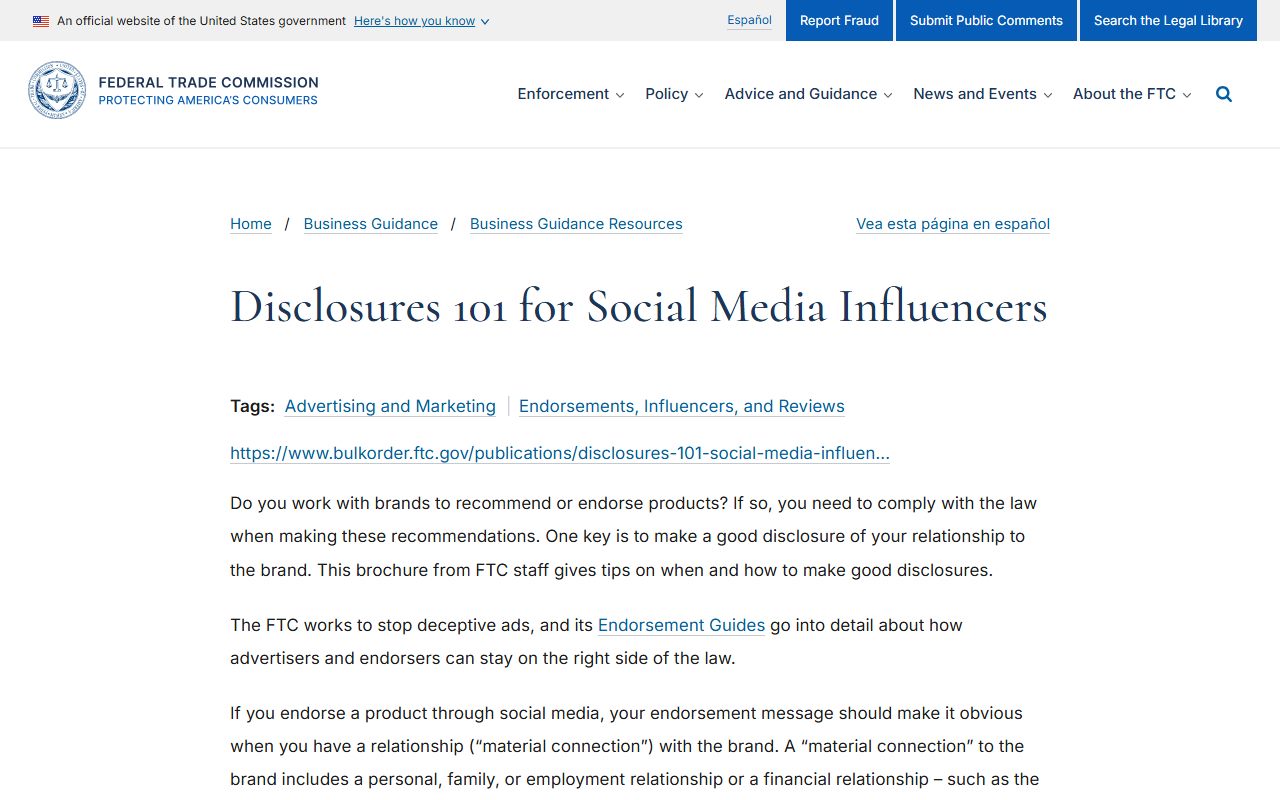
- FTC: Disclosures 101 for Social Media Influencers (placement, acceptable and unacceptable terms, Stories, livestreams, same language) (checked Oct 10, 2026)
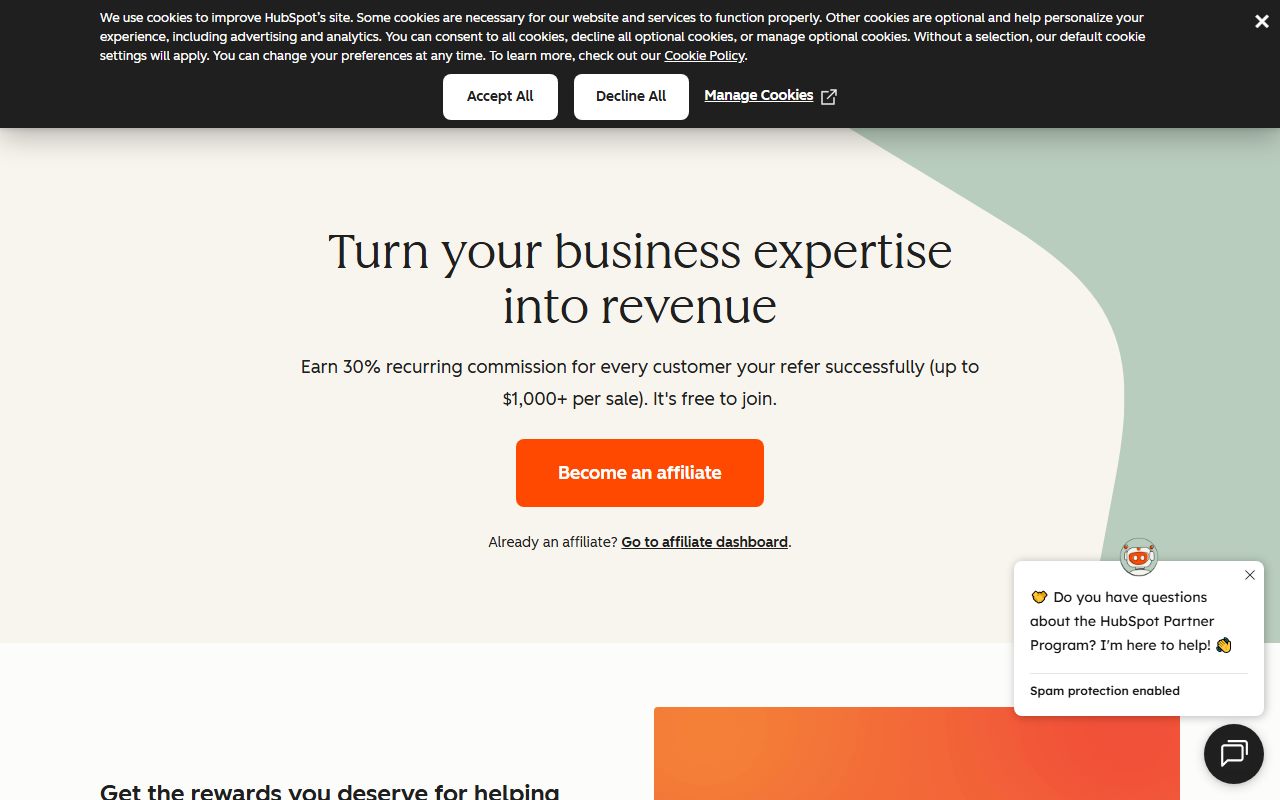
- HubSpot Affiliate Program (example of a program that requires FTC-compliant disclosure) (checked Oct 10, 2026)