How Affiliate Programs Pay on Upgrades and Add-Ons
A referred customer who buys more is worth more to the vendor and often nothing extra to you. HubSpot states the rule in one sentence and gives a worked example with an extra seat. ActiveCampaign and Kinsta take a percentage of what is paid, so the commission climbs with the plan. Semrush pays a fixed amount for any subscription level. Here is how each model treats growth, as of October 2026.
This article is a documentation review: it is based on the vendors' own published pages, checked on the date shown. We may earn a commission from some links; it never affects what we recommend.
A referred customer who buys more is worth more to the vendor, and often worth nothing extra to you. Which outcome you get is set by one line in the program terms.
HubSpot answers it in a sentence and gives a worked example with an extra seat. ActiveCampaign and Kinsta take a percentage of what is paid, so the commission climbs with the plan.
Semrush pays a fixed amount for any subscription level, which means a bigger plan adds nothing. Every figure below was read from the vendors own pages and network docs on October 23, 2026.
HubSpot says no, and shows its working
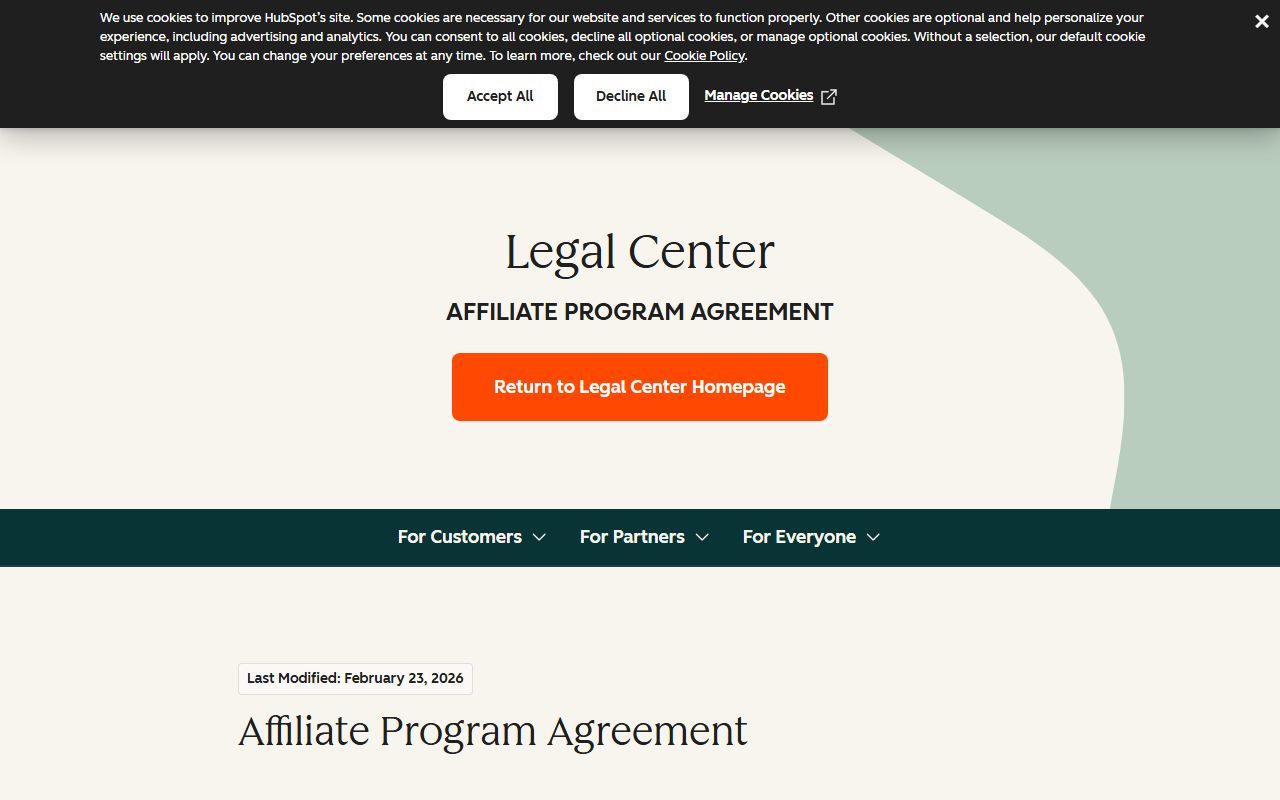
HubSpot ties commission to the first transaction only: you "will receive a Commission payment for that Customer Transaction only, regardless of any additional purchases made by that customer during their Subscription Service".
Then it works the example through.
If the first transaction is one user of Sales Hub Professional "and there is a subsequent purchase by that same customer for an additional user of Sales Hub Professional for the same subscription, Affiliate will receive Commission for the initial user purchase only".
And it closes the gap for other product lines: "The Affiliate will not be entitled to receive Commission on any additional purchases of HubSpot Products by that same Customer".
That is a one-and-done bounty wearing a long agreement. For this model, the size of the first purchase is the whole payout, so plan-selection content is worth more than retention content.
Percentage programs ride the invoice up
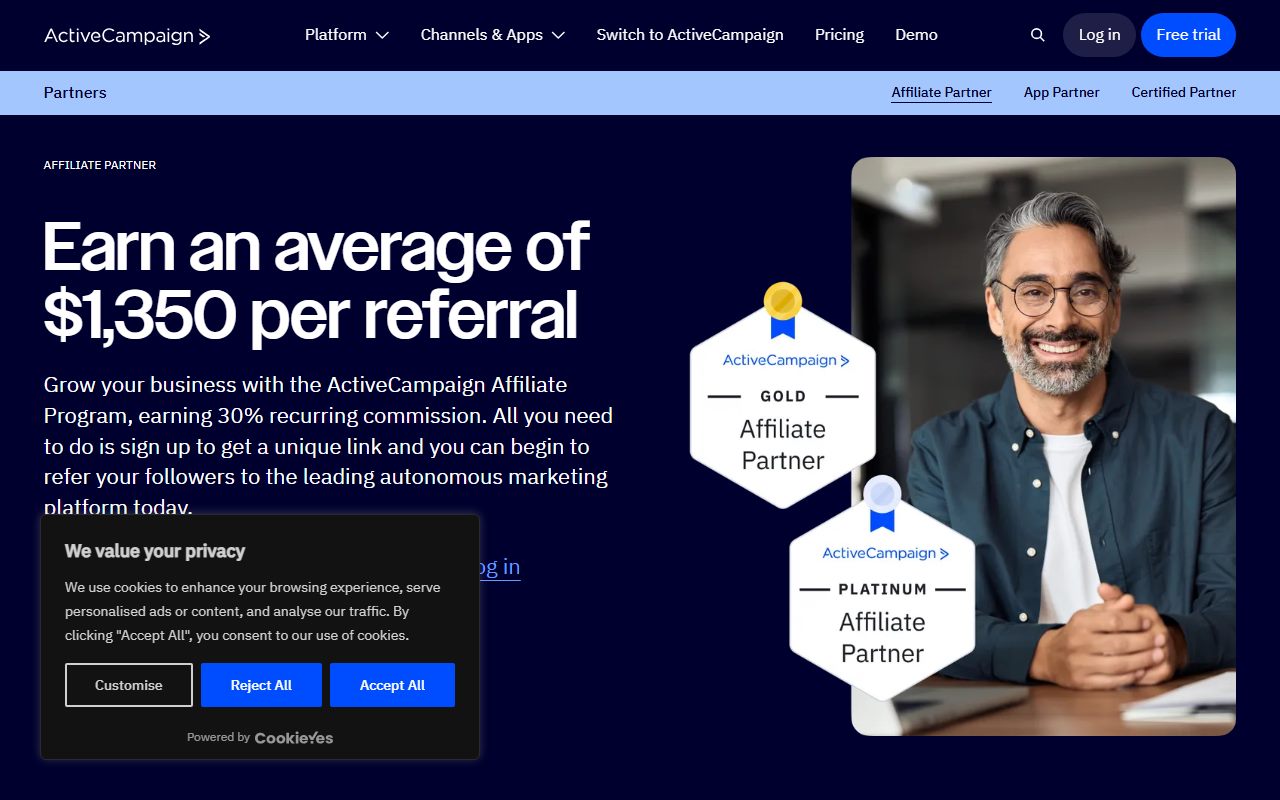
ActiveCampaign is explicit that the payout follows the bill: "you can earn a 30% recurring commission on the subscription price paid".
Its rate itself is also variable, "starting at 20% commission and climbing up to 30% based on new business and retention". A customer who upgrades raises both the base and, over time, the rate band.
Kinsta pairs a bounty with the same percentage logic: "a one-time bonus of up to $500, plus lifetime monthly commissions of 10% for every referral".
Kinsta also publishes the assumption behind its own earnings calculator, naming a 2% churn rate and plan tiers from WP 2 up to Agency 60. An upgrade from one plan to a larger one moves the 10% with it.
The 12-month arithmetic for this family of deals is laid out in what recurring commission really pays over 12 months.
Fixed-fee programs do not move at all
Semrush heads its commission table "Semrush Toolkit Commissions (For any subscription level)", and repeats the same footnote under its loyalty tiers.
So the sale amount is the same whether the referral buys the cheapest tier or the most expensive one. Semrush One pays $300 at Basic level, SEO Toolkit $200, Social and Local Toolkit $50.
What does change the number is the product and the partner tier. Semrush One rises from $300 at Basic to $450 at Platinum, with 50 or more sales a quarter.
A second product is a second sale rather than an add-on. That is the only version of growth a flat per-product table can reward.
Tier mechanics across programs are compared in how SaaS affiliate tiers and bonuses work.
FreshBooks pays twice, at two different events
FreshBooks is the clearest case of an upgrade being a paid event. Affiliates are paid, in its words, "for every trial sign-up and upgrade to a paid plan".
The ceiling is published as "up to $200 per paid subscriber", with a customised commission structure that unlocks as the partner grows.
The money still waits. New commissions "first enter a 14-day drip delay to account for customer cancellation periods" before approval and payout through PartnerStack.
Note what is not promised: nothing on the page we read states a payout for a later move from a cheaper paid plan to a dearer one. We could not confirm that case on October 23, 2026.
Networks model the second purchase as a child action
Impact has a feature for exactly this. Chained actions link a parent event to a child event, and its own examples are a trial converting to a paid membership, and a subscription "resulting in recurring renewals over the following months".
The link is a shared customer ID, which "must be passed in both parent and child actions". Without it, the upgrade has no partner to credit.
The window is generous by default. The chained action referral window "is 5 years by default", and child actions tracked beyond it are not associated with the parent.
Each leg can also be undone on its own: "Both parent and child actions can be reversed individually if needed", which is how refund and chargeback clawbacks reach a follow-on purchase.
The rate can change with what was bought, not just how much
Awin lets advertisers vary the rate by condition rather than by amount. A commission group sets "different commission rates based on specific criteria", including product category, customer type such as new versus returning, and device type.
Plan availability limits how granular that gets: "Awin Access customers can have up to three commission groups (including Default)", while higher plans are unlimited.
The commission model itself decides whether size matters at all. Percentage-based CPA pays "a percentage of the total order value", while fixed-value CPA pays "the same amount for every sale, regardless of order value".
If a transaction matches no group, Awin falls back to the Default group. An add-on priced in its own category can therefore pay a different rate from the main plan.
Which of your pages earned any of it is a separate question, answered by how sub-IDs show which page earned a commission.
- Does a second purchase by the same customer pay at all
- Is the rate a percentage of the invoice or a fixed amount per sale
- Does an extra seat count as a new transaction or part of the old one
- How long after the first sale can a follow-on purchase still credit you
- Do add-ons sit in a different commission group with a different rate
- Can the follow-on commission be reversed on its own
Bottom line
Two programs with the same headline rate can pay very differently over a customer lifetime. The variable is not the rate, it is whether growth is a new event or part of an old one.
Under a fixed one-off bounty, write for the first decision. Under a percentage, write for the customer who keeps paying and keeps adding seats.
Either way, do not assume an upgrade earns anything until the terms say so. Existing-customer exclusions catch people the same way, as referrals SaaS affiliate programs will not pay shows.
And check the clause before you publish the review, not after the dashboard disappoints you, which is the argument of read SaaS affiliate program terms before promoting.
Frequently asked questions
Do affiliate programs pay commission when a customer upgrades?
Some do and some do not. HubSpot pays for the initial customer transaction only, even for an extra seat on the same subscription. ActiveCampaign pays 30% of the subscription price paid, so the amount rises with the plan.
Does a bigger plan mean a bigger commission at Semrush?
No. The Semrush commission table is headed for any subscription level, so the per-product amount is the same at any tier. The number changes with the product promoted and the partner loyalty tier.
Is an extra seat a new sale?
Not at HubSpot. Its agreement gives the worked example of a subsequent purchase of an additional user on the same subscription and states the affiliate receives commission for the initial user purchase only.
How do networks track a purchase that happens months later?
Impact chains a child action to a parent action using a shared customer ID. The chained action referral window is five years by default, and brands can shorten it.
Can an add-on pay a different rate from the main plan?
On Awin, yes. Commission groups set different rates by criteria such as product category or customer type, and a transaction that matches no group falls back to the default rate.
Does an upgrade commission get held before payout?
Usually. FreshBooks puts new commissions through a 14-day drip delay to account for cancellation periods, then a review, then payment on the next monthly PartnerStack invoice.
Sources
- HubSpot Affiliate Program Agreement (commission for that Customer Transaction only, worked example of an additional Sales Hub Professional user, no commission on additional purchases) (checked Oct 23, 2026)
- ActiveCampaign Affiliate Partner (30% recurring commission on the subscription price paid, 20% to 30% tiers based on new business and retention) (checked Oct 23, 2026)
- Kinsta Hosting Affiliate Program (one-time bonus up to $500 plus 10% lifetime monthly commissions, plan list from WP 2 to Agency 60, 2% churn assumption in the earnings calculator) (checked Oct 23, 2026)
- Semrush Affiliate Program (toolkit commission table for any subscription level, loyalty tiers from Basic to Platinum, Semrush One $300 to $450) (checked Oct 23, 2026)
- FreshBooks Affiliate Program (paid for every trial sign-up and upgrade to a paid plan, up to $200 per paid subscriber, 14-day drip delay) (checked Oct 23, 2026)
- impact.com Help Center: Track Your Conversion Funnel Using Chained Actions (parent and child actions, recurring renewals example, shared customer ID, individual reversals) (checked Oct 23, 2026)
- impact.com Help Center: Referral Windows for Chained Action Reports Explained (five-year chained action referral window by default) (checked Oct 23, 2026)
- Awin help: Commission Groups (rates by product category, customer type and device; three groups on Awin Access; default group fallback) (checked Oct 23, 2026)
- Awin help: Commission models (percentage-based CPA versus fixed-value CPA, CPL and CPC) (checked Oct 23, 2026)