Referrals SaaS Affiliate Programs Will Not Pay
A referral can be genuine, tracked and inside the window and still pay nothing. The reasons are published: the customer was already known to the vendor, the plan they bought is not eligible, the workspace was not new, or the country changes the amount.
This article is a documentation review: it is based on the vendors' own published pages, checked on the date shown. We may earn a commission from some links; it never affects what we recommend.
Most affiliate disappointment is not a tracking failure. The click was recorded, the customer signed up, and the program still owed nothing, because the referral did not meet a definition published in advance.
HubSpot excludes anyone its sales team already spoke to, Shopify excludes three of its own plan families, and Notion only counts new workspaces. This note reads those definitions from the vendors' own program pages and agreements, as checked on October 13, 2026.
Existing customers are excluded, and the lookback is 60 days
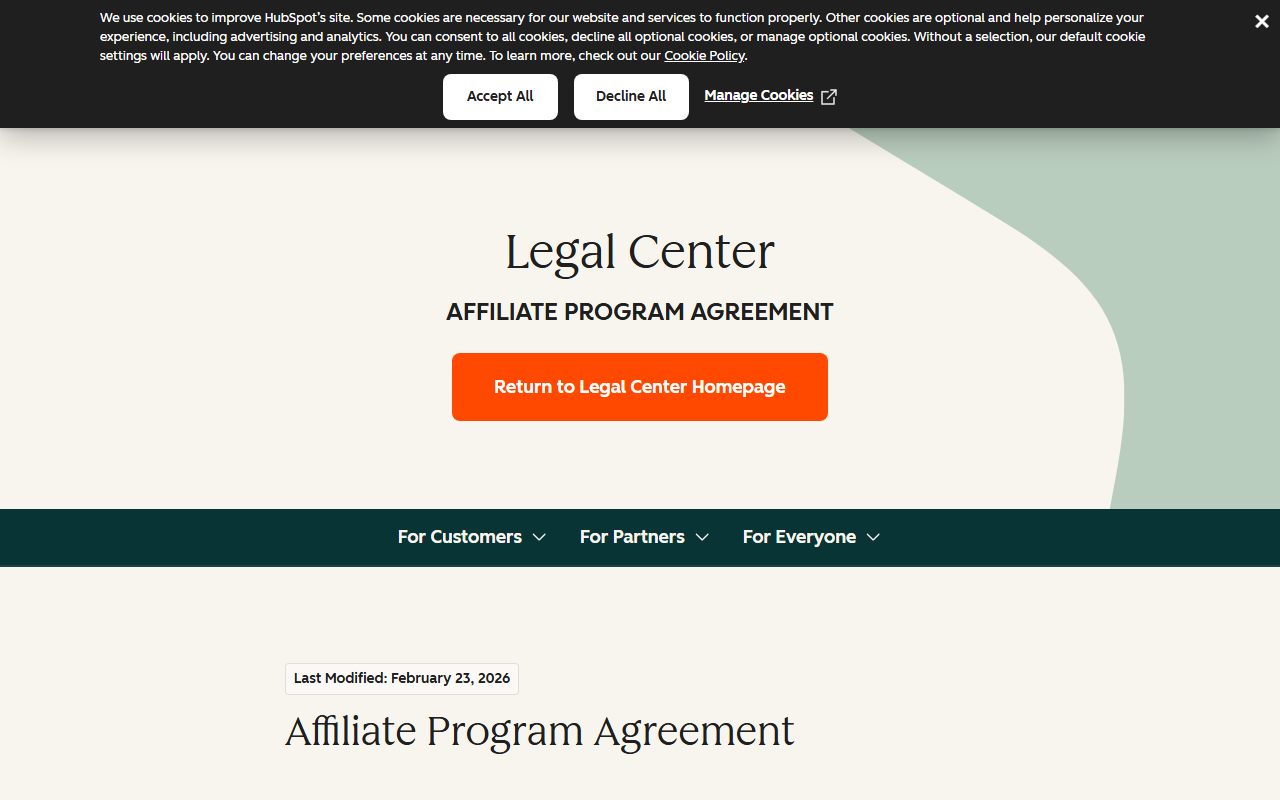
HubSpot's affiliate program agreement, last modified February 23, 2026, sets two conditions for a lead to be valid and accepted in the company's reasonable determination.
The first is that it must be a new potential customer. The second is that it must not be, at the time of submission or sixty days prior, one of HubSpot's pre-existing customers or involved in its active sales process.
That second clause is the one no publisher can check. A reader may have filled in a demo form two months ago, which is invisible from outside and decisive inside.
It is also an argument for promoting products with a wide self-serve base rather than those sold mainly through outbound sales, where the chance of overlap with an active pipeline is higher.
The agreement is a separate document from the program page, and the two carry different levels of detail. Why both have to be read is the subject of read SaaS affiliate program terms before promoting.
One commission per customer, whatever they buy later
The same HubSpot agreement limits the payout to the transaction that was referred. It states that the affiliate receives a commission payment for that customer transaction only, regardless of any additional purchases made during the subscription.
The clause is explicit that the affiliate is not entitled to commission on any additional purchases of HubSpot products by that same customer.
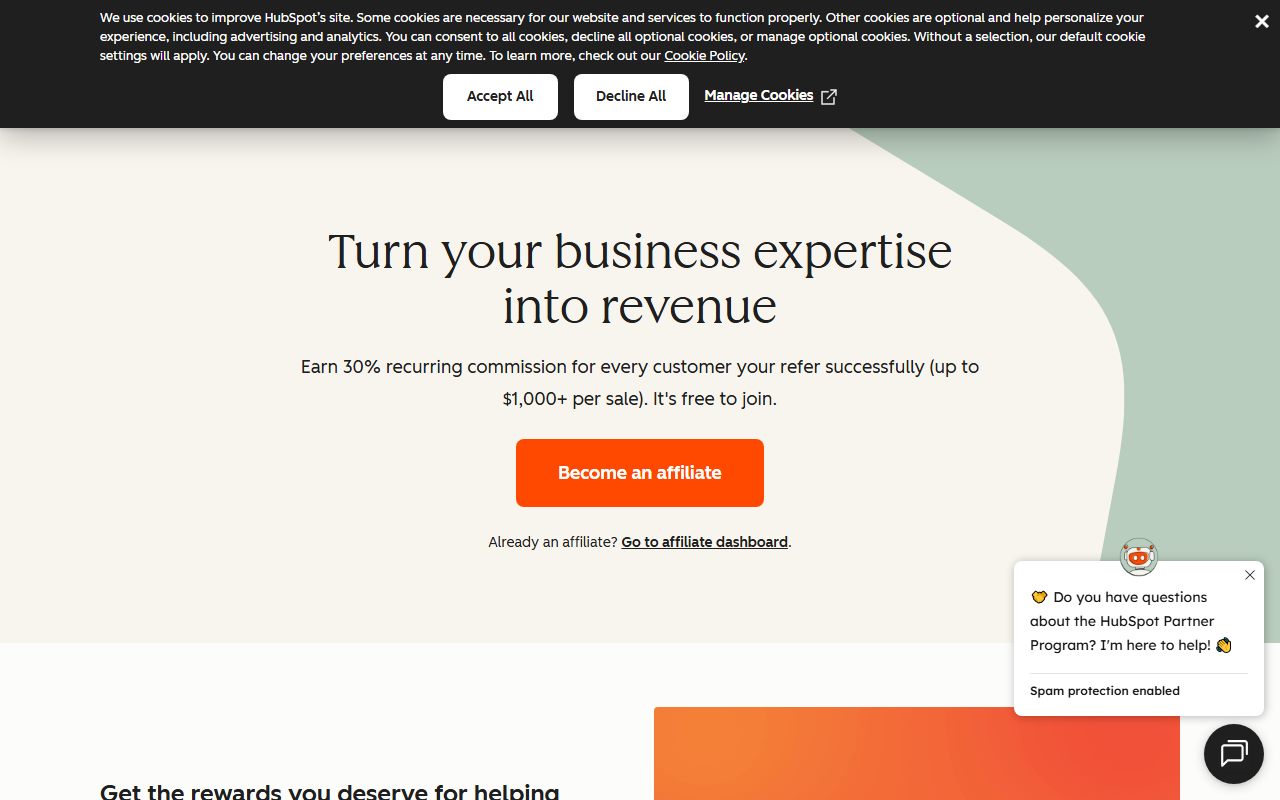
Read alongside the program page, which pays 30% recurring for up to one year, the economics are bounded twice: once by the one-year ceiling and once by the single-transaction rule.
The arithmetic those two limits produce is set out in what recurring commission really pays over 12 months.
The plan the customer picks decides whether you are paid
Shopify's affiliate FAQ states that commission is earned when new merchants sign up for a full-priced store plan through the affiliate link. A discounted plan does not satisfy that wording.
Its help centre page for affiliates goes further and splits the catalogue. Basic, Grow and Advanced are listed as eligible for commission, while Plus, Enterprise and Retail are listed as not eligible.
That exclusion removes the largest accounts from the payout. A referral who starts on a trial and then moves straight to an enterprise contract is a good outcome for the vendor and nothing for the publisher.
The same page sets the timing: actions are locked on the 21st day of the month for the previous month's actions, with payment processed the following day into the Impact account balance.
Where the customer lives changes the amount
Shopify's program page advertises up to $150 per qualified referral and says the amount varies by the country where the merchant is located.
Its help centre publishes the split. A first tier covering the United States, Canada, Australia, New Zealand and parts of Asia, Europe and the Middle East pays $150 per referral.
A second tier covering Africa, India, Latin America and the rest of Asia pays $25 per referral, as of October 13, 2026. That is a sixfold difference on the same action.
For a publisher with a global audience the practical effect is that reported conversions and reported earnings move at different rates, and neither number explains the other on its own.
A fixed bounty behaves differently from a share of subscription revenue once geography is in play, which is part of the comparison in what recurring commission really pays over 12 months.
New workspace, not new user
Notion's affiliate page defines the qualifying event narrowly: net new workspaces that upgrade to a paid Plus or Business plan within 180 days of clicking the affiliate link are eligible, paid on a last-click basis.
Two words carry the exclusion. Net new rules out a reader who already has a workspace, and Plus or Business rules out upgrades to other plans.
Seat growth is treated more generously. The page says that additional seats bought after the first invoice count as an additional transaction, as long as the customer signed up within a year.
Notion's page also carried a notice on October 13, 2026 that the program is not accepting new affiliates, so these definitions currently apply only to partners already in it.
A trial is a different payout line, not a smaller one
Semrush publishes two separate figures for the same referral path: $10 for a trial activation and a per-sale commission that depends on the product and the partner tier.
Not every product carries both. Its loyalty table lists the AI Visibility Toolkit with a sale commission and no trial payout, while the other toolkits show $10 per trial, checked October 13, 2026.
Treating a trial figure as a forecast of revenue therefore overstates it for one product and understates the path for others. The two lines have to be modelled separately.
Where the line sits between a trial, a sign-up and a sale also depends on which program track you joined, a distinction drawn in affiliate vs referral vs partner programs in SaaS.
Five lines to record per program
Each of these is published somewhere by at least one of the programs above, and each one changes what a conversion is worth.
- The customer-newness test, including any lookback period for pre-existing customers or active deals
- Which plans are eligible, and whether discounted plans count
- Whether the amount varies by the customer's country
- Whether later purchases, upgrades or extra seats generate anything
- Whether a trial pays separately from a sale, and for which products
Those five answers determine the value of a click long before any dashboard does. The window that decides whether the click counts at all is a sixth question, compared in how affiliate cookie windows compare across SaaS networks.
Bottom line
Programs do not hide these exclusions. They sit on program pages, help centre articles and agreements, in different places for each vendor, which is why they are missed rather than disputed.
Before writing about a product, check the plan families that are eligible, the newness test on the customer, and whether geography changes the figure. Those three answers change a forecast more than the headline rate does.
Then read the rate itself the way the agreement defines it, as described in read SaaS affiliate program terms before promoting.
Frequently asked questions
Why would a tracked referral earn nothing?
Because the referral failed a published definition. HubSpot excludes customers in its active sales process or known to it in the previous 60 days, and Shopify pays only on full-priced Basic, Grow and Advanced plans.
Does HubSpot pay on a customer's later purchases?
No. Its affiliate agreement, last modified February 23, 2026, states that commission applies to that customer transaction only, regardless of any additional purchases made during the subscription.
Which Shopify plans do not pay commission?
Plus, Enterprise and Retail are listed as not eligible for commission in Shopify's affiliate help centre page, while Basic, Grow and Advanced are eligible, as of October 13, 2026.
Does the merchant's country change the payout?
At Shopify, yes. Its help centre lists $150 per referral for a first group of countries including the United States and Canada, and $25 for a second group covering Africa, India, Latin America and the rest of Asia.
What does Notion mean by an activated sign-up?
Its page defines eligibility as net new workspaces that upgrade to a paid Plus or Business plan within 180 days of the click, paid on a last-click basis. Existing workspaces do not qualify.
Do free trials pay anything?
Sometimes, as a separate line. Semrush lists $10 for a trial activation on most toolkits, but its AI Visibility Toolkit shows a sale commission with no trial payout, checked October 13, 2026.
Sources
- HubSpot Affiliate Program Agreement, last modified February 23, 2026 (valid lead test, 60-day pre-existing customer lookback, one commission per customer) (checked Oct 13, 2026)
- HubSpot Affiliate Program (30% recurring for up to one year, 180-day cookie, $10 minimum balance) (checked Oct 13, 2026)
- Shopify Affiliate Program (commission on new merchants buying a full-priced store plan, up to $150, $10 minimum balance) (checked Oct 13, 2026)
- Shopify Help Center: Shopify Affiliate earnings (Basic, Grow, Advanced eligible; Plus, Enterprise, Retail not eligible; $150 and $25 country tiers; actions locked on the 21st) (checked Oct 13, 2026)
- Notion Affiliate Program (net new workspaces upgrading to paid Plus or Business within 180 days, additional seats as additional transactions, not accepting new affiliates) (checked Oct 13, 2026)
- Semrush Affiliate Program (per-product sale commissions by tier, $10 trial activation, AI Visibility Toolkit without a trial payout) (checked Oct 13, 2026)