Affiliate vs Referral vs Partner Programs in SaaS
The same vendor often runs two or three programs with different rates, durations, fees and rules about who may join. HubSpot's affiliate track pays 30% for up to a year and bars client referrals; its partner track costs $400 a month and pays 20% for three years. Here is how to tell the tracks apart, as of October 2026.
This article is a documentation review: it is based on the vendors' own published pages, checked on the date shown. We may earn a commission from some links; it never affects what we recommend.
Vendors use the words affiliate, referral, partner and reseller loosely, and sometimes for the same program. The differences that matter are concrete: how the referral is tracked, how long the commission lasts, whether there is a fee, and whether you may work with the customer after the sale. This note reads HubSpot's two programs, Shopify's two programs and PartnerStack's partner-type definitions, all as published on October 10, 2026, and sets out the questions that tell you which track you are actually joining.
Three tracks, three different jobs
An affiliate program pays for traffic that converts. Tracking is a link and a cookie, the payout is a percentage or a bounty for a limited period, and the affiliate usually never speaks to the customer.
A referral or partner program pays for a named lead or a serviced client. Tracking is a form or a deal registration, the payout often runs for years, and the partner is expected to implement, train or support. Fees, certifications and minimum spend are common.
A reseller or co-sell program goes one step further: the partner sells the software directly and may own the billing. PartnerStack's partner page lists affiliate, co-sell, influencer and referral as distinct program types; reseller is not named there.
HubSpot: affiliates get 30% for a year, partners get 20% for three
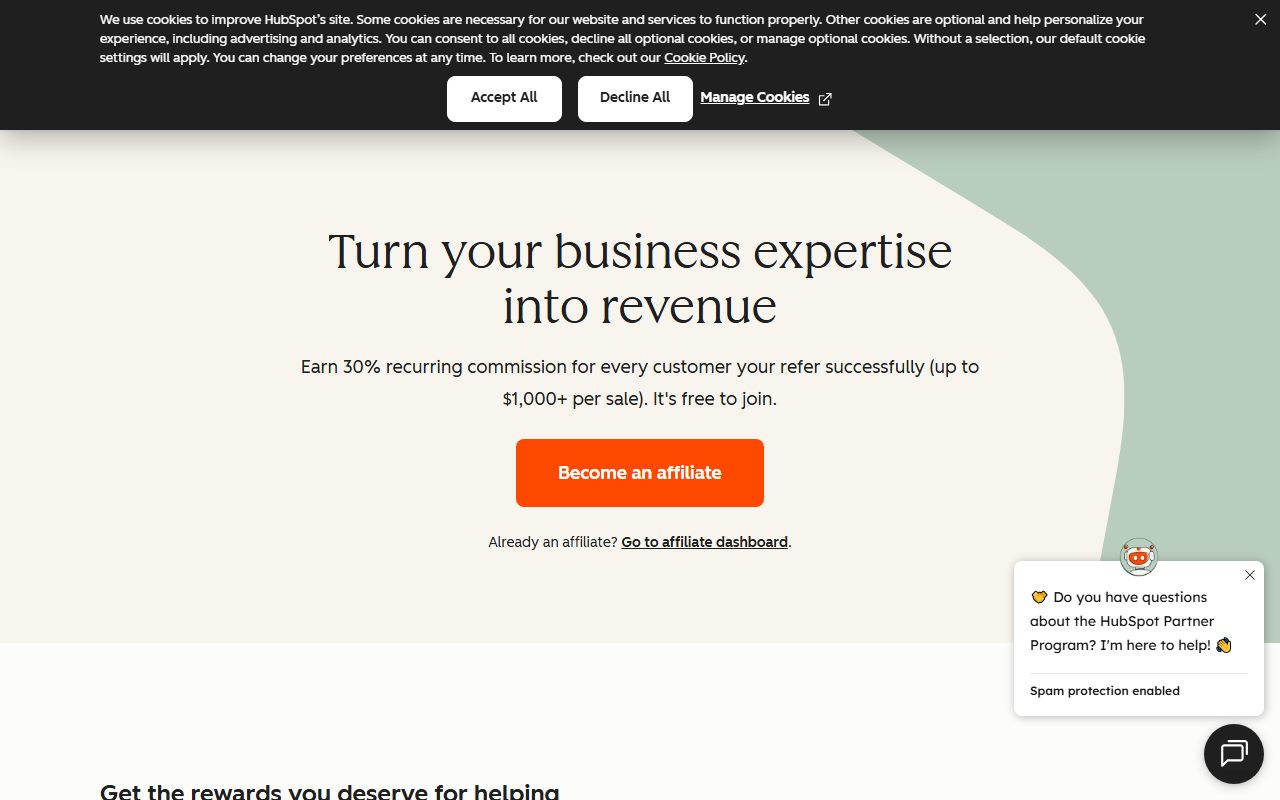
HubSpot's affiliate page states 30% recurring commission for up to one year, a 180-day cookie, a $10 minimum payout and no fee to join. It says the program is for businesses and content creators who monetize content, and it is explicitly not set up to support client referrals.
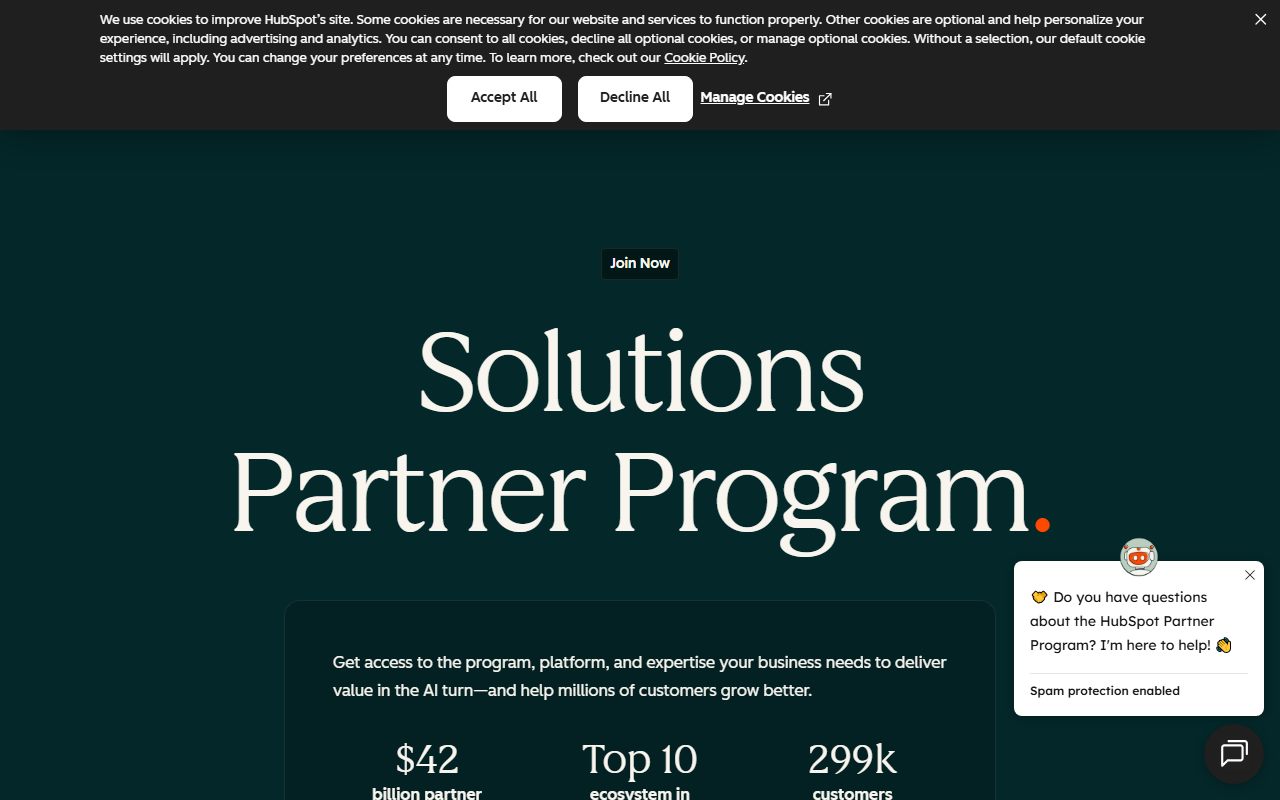
HubSpot's Solutions Partner page describes the other track. Partners earn 20% commission for three years on deals they bring, and 20% for one year on certain upmarket deals co-sold with HubSpot's sales team. The program is designed for client referrals and aimed at agencies and consultancies.
The partner track has a price. The Solutions Partner Package starts at $400 a month, met either by paying the fee or by having at least $400 in HubSpot software spend after discounts. The page says the fee is waived for partner-customers whose spend exceeds it.
Editorial calculation on a $20 per seat Starter customer with two seats, at list price. Affiliate: 30% of $40 for 12 months is $144. Solutions partner: 20% of $40 for 36 months is $288, minus up to $4,800 a year in fees if the spend waiver does not apply. The partner rate only wins at volume.
Shopify: a one-time bounty for affiliates, four years for partners
Shopify's affiliate page pays up to $150 USD per qualified referral, one time, for sign-ups to the Basic, Grow or Advanced plans at full price. Tracking is a 30-day click window, extended up to 400 days while a referred store is on a free trial.
Shopify's partner help center describes the other tracks. A partner who builds and transfers a store earns 20% of the merchant's monthly base platform or subscription fee plus 0.1% of monthly eligible GMV, for four years. Starter and Lite plans are excluded.
Partners also get flat bounties: $2,500 for referring a new merchant to Plus or Enterprise through a lead form, $2,500 for upgrading an existing merchant to Plus, and $500 for a POS Pro referral that meets usage thresholds within six months.
The two Shopify tracks do not compete; they measure different work. An affiliate link cannot earn the $2,500 Plus bounty, and a lead form is not an affiliate link. Which one applies depends on whether you send traffic or hand over a named merchant.
Read the eligibility line before the rate
The track you may join is decided by who you are, not by which rate you prefer. HubSpot's affiliate page lists its target: software reviewers, content publishers, course creators, B2B marketplaces and app builders, reviewed within two to three business days. The approval clauses sit alongside the others in how to read SaaS affiliate terms.
Shopify's affiliate page says the program is free and open to anyone with an audience of merchants, but not every application is approved; it names an active website, an established audience and original commerce content as the usual markers, with applications processed in about 24 hours.
Partner tracks ask for more. HubSpot's page describes partners as service firms serving mid-market and enterprise customers, with client implementation spend of $10k to $500k a year, typically ready to serve clients two to three months after onboarding. That is a business model, not an audience.
The duration gap is the real difference in money
Across both vendors, the affiliate track is short and the partner track is long. HubSpot: one year versus three. Shopify: one payment versus four years of revenue share. The partner rates are lower or similar per month, but the tail is what changes the total.
That tail depends on churn, the same variable that drives what recurring commission really pays over 12 months. A three-year share on a customer who leaves in month eight is worth less than a one-year share on one who stays.
Tracking also differs. Affiliate tracks depend on the cookie and window rules in how affiliate cookie windows compare across SaaS networks. Partner tracks depend on deal registration: Shopify's Plus bounty requires that the merchant has not contacted Shopify Sales before your submission.
Questions that identify the track
Vendors do not always label their programs clearly, and some run both under one partner portal. The answers to six questions, read from the program page and the terms, settle which one you are looking at:
- How is the referral tracked: a link and cookie (affiliate), a lead form or deal registration (referral or partner), or your own invoice (reseller)?
- How long does the payout last: HubSpot affiliates one year, HubSpot partners three years, Shopify store-transfer partners four years, Shopify affiliates one payment
- Is there a fee or spend requirement: HubSpot's $400 a month partner package versus free affiliate entry at HubSpot and Shopify
- May you work with the customer after the sale: HubSpot's affiliate page says the program is not set up for client referrals
- Who approves you and on what basis: audience and content for affiliates, service capacity and certifications for partners
- Where is the money paid: Impact for HubSpot affiliates, Shopify's own dashboard for its affiliates, with the payout rules in how SaaS affiliate programs pay out
Payout mechanics for the affiliate tracks, including minimums and payment days, are set out in how SaaS affiliate programs pay out. Partner tracks usually pay through the vendor's own partner dashboard on the vendor's own calendar.
One rule holds across all tracks: the FTC disclosure duty does not depend on the label. A partner who publishes a recommendation with a tracked link owes the same disclosure as an affiliate, as covered in how to disclose affiliate links under the FTC guides.
Bottom line
If you publish and send traffic, you are an affiliate, and the vendor's affiliate page is the one to read: HubSpot's 30% for a year, Shopify's up to $150 once. If you implement and serve clients, read the partner page: HubSpot's 20% for three years at $400 a month, Shopify's 20% plus 0.1% of GMV for four years.
Do not apply to the partner track for the longer tail if you cannot do the service work; the fee and the eligibility review will cost more than the difference. And whichever track you join, read the full terms first, using the clause list in how to read SaaS affiliate terms before you promote.
Frequently asked questions
What is the difference between an affiliate program and a referral partner program?
An affiliate program tracks a link and pays for conversions for a limited period; a referral or partner program tracks a registered lead or serviced client and usually pays longer, often with a fee. HubSpot's pages show the split: 30% for one year for affiliates, 20% for three years for solutions partners, as of October 2026.
Does the HubSpot affiliate program allow client referrals?
No. HubSpot's affiliate page states the program is not set up to support client referrals and points agencies and consultants to the Solutions Partner Program, which costs from $400 a month and pays 20% commission for three years on deals partners bring.
How much does Shopify pay partners compared with affiliates?
Shopify affiliates earn up to $150 USD once per qualified referral. Shopify partners who build and transfer a store earn 20% of the monthly subscription fee plus 0.1% of eligible GMV for four years, and $2,500 for a qualifying Plus or Enterprise referral, per the partner help center in October 2026.
Is a reseller program the same as an affiliate program?
No. A reseller or co-sell partner sells the software directly, often on its own invoice, while an affiliate only sends tracked traffic. PartnerStack lists affiliate, co-sell, influencer and referral as separate program types on its partner page, as of October 2026.
Sources
- HubSpot Affiliate Program (30% up to one year, 180-day cookie, free to join, not for client referrals) (checked Oct 10, 2026)
- HubSpot Solutions Partner Program ($400 a month package, 20% commission for three years) (checked Oct 10, 2026)
- Shopify Affiliate Program (up to $150 per qualified referral, 30-day and 400-day tracking, approval markers) (checked Oct 10, 2026)
- Shopify Partners Help Center: How Partners earn on Shopify (20% plus 0.1% GMV for four years, $2,500 Plus referral, $500 POS Pro) (checked Oct 10, 2026)
- PartnerStack for partners (affiliate, co-sell, influencer and referral program types) (checked Oct 10, 2026)